5 designers, ideas, an aesthetic
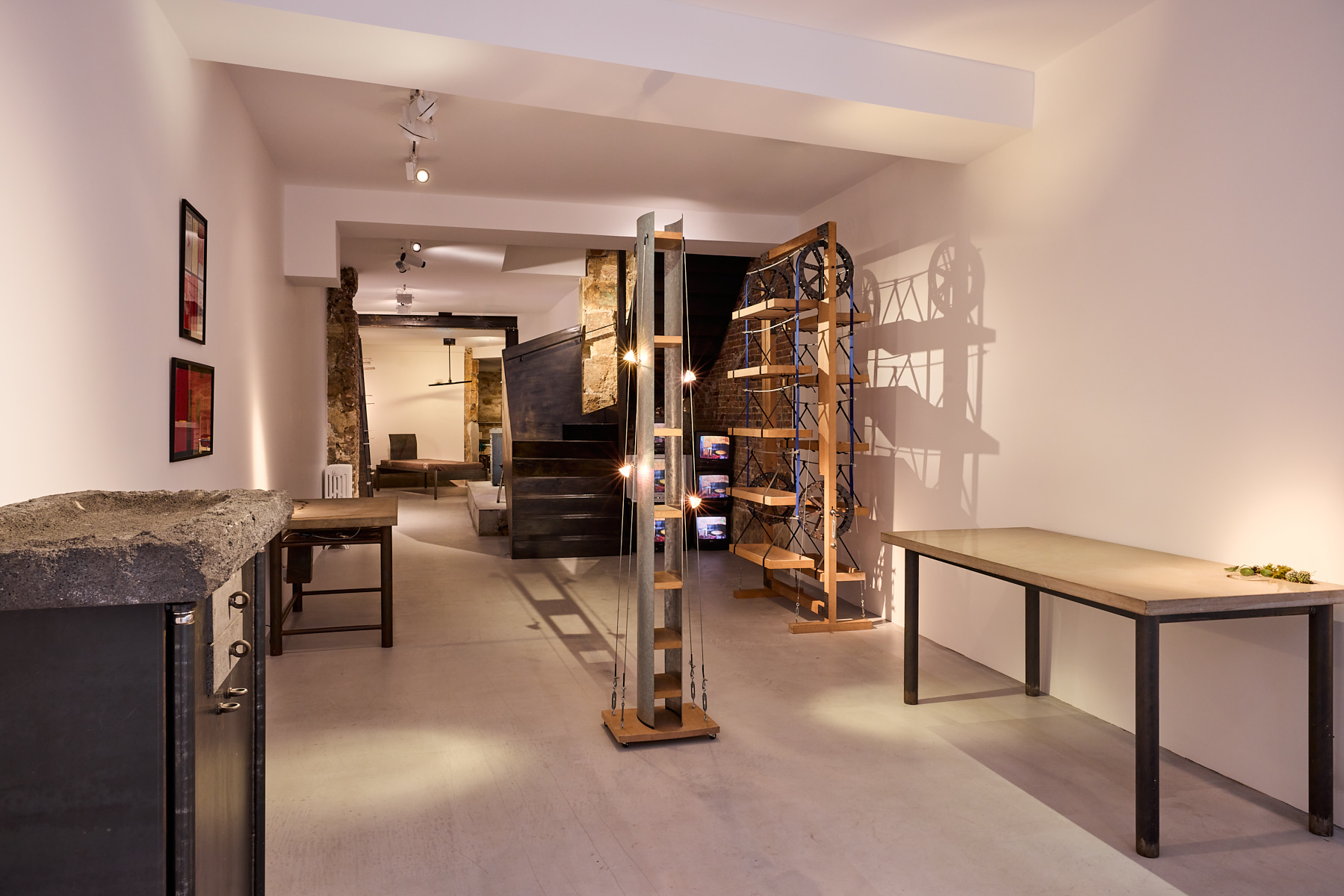
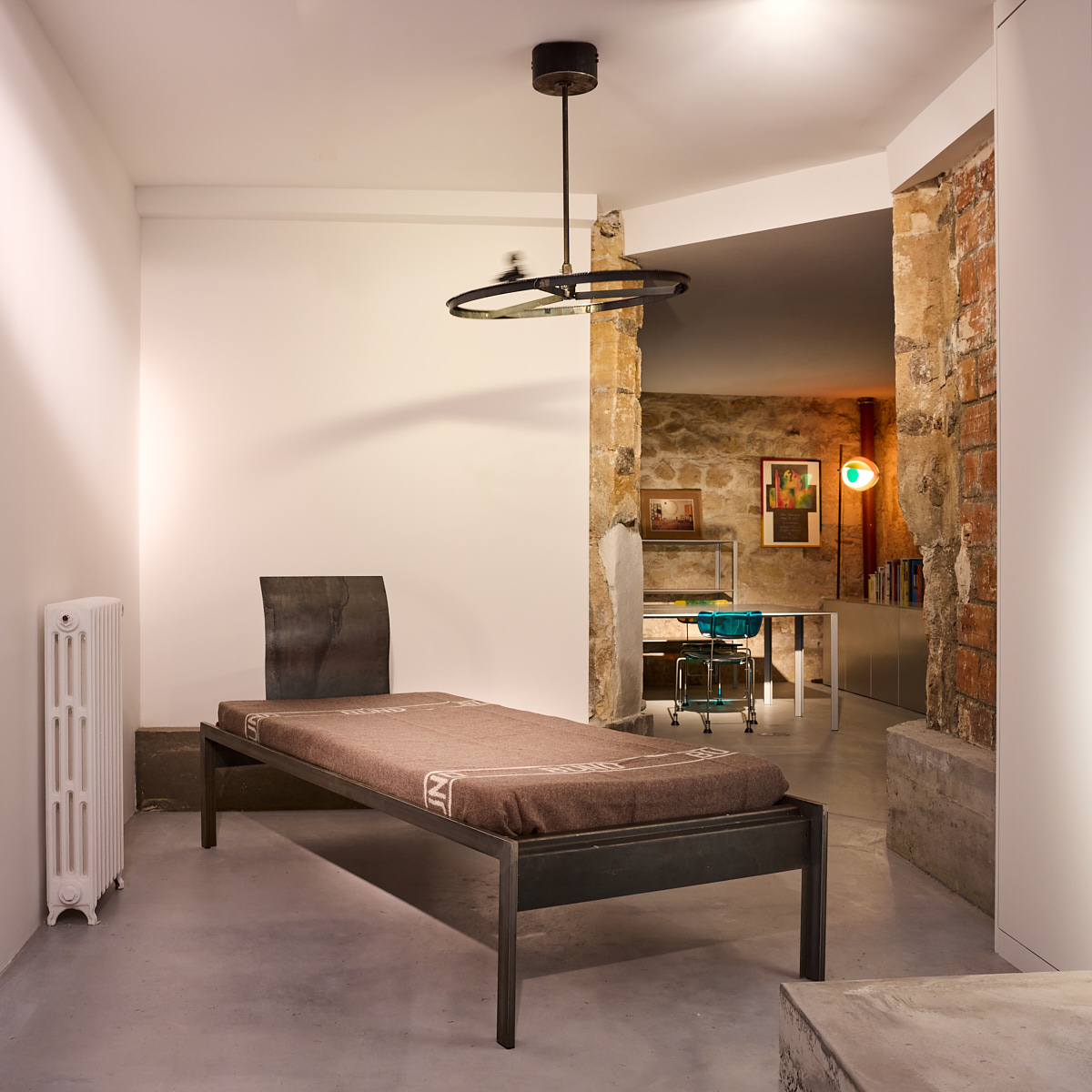
Dedicated to Pentagon Gruppe, this retrospective exhibition immerses the visitor in the raw, cold, and metallic universe of the German collective. Founded in Cologne in 1985, the group brings together Gerd Arens, Wolfgang Laubersheimer, Reinhard Müller, Ralph Sommer, and Meyer Voggenreiter. In contrast to the conventional aesthetic inherited from the Bauhaus, these five designers develop an informal language in which the object is no longer at the service of function, but becomes the direct expression of an idea. Their pieces, often uncomfortable, sometimes mobile, and always unsettling, reflect a way of thinking that breaks free from established norms, placing drawing above all else. “Form before function, style above all” has never been truer than with Pentagon Gruppe.
A raw and unprecedented selection: between prototypes and historical works
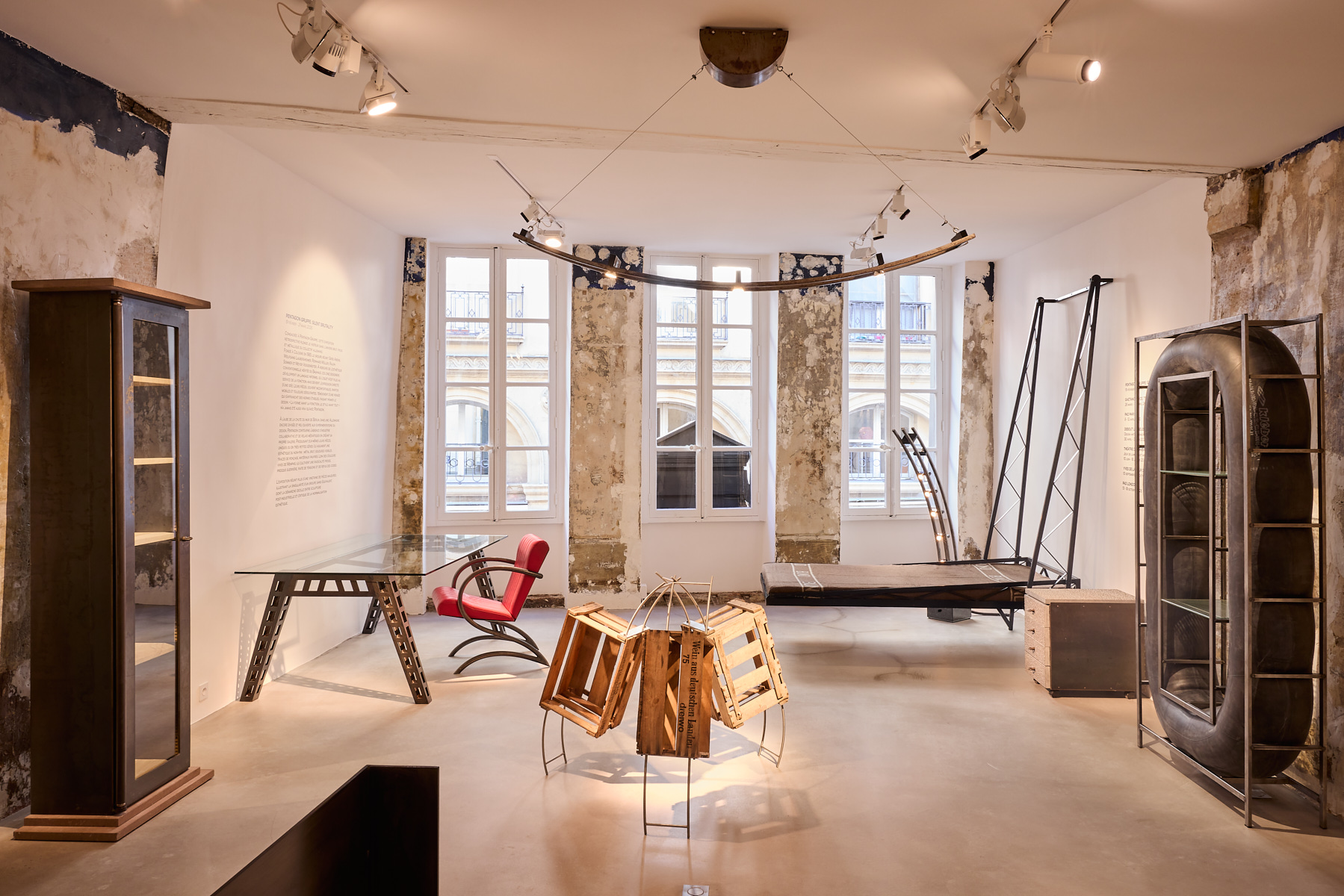
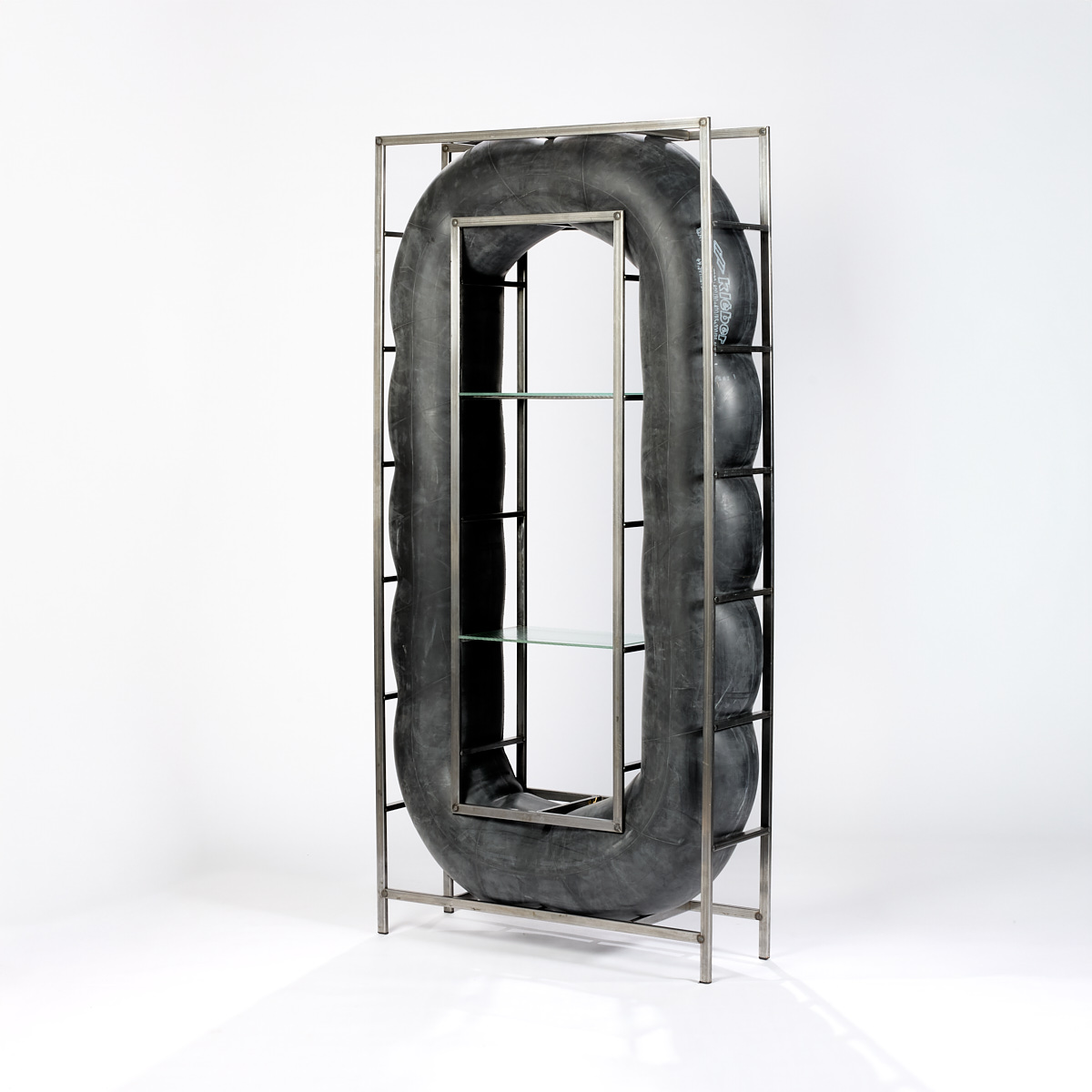
The exhibition brings together more than twenty major pieces, illustrating the uniqueness of a group with no equivalent, whose approach oscillates between post-industrial sculpture and a critique of aesthetic standardization.
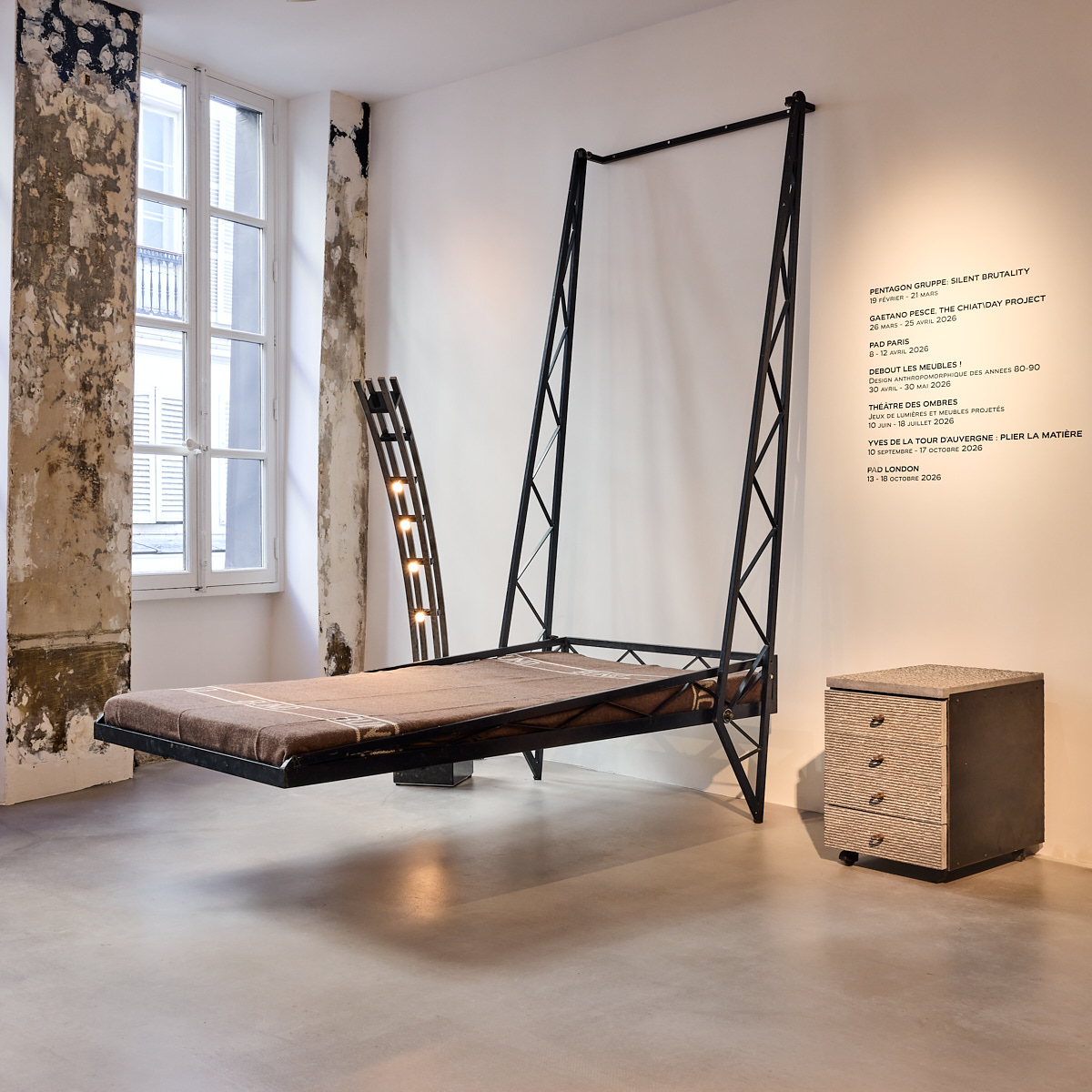
Folding bed (1987)
Disregarding all comfort, Pentagon brings brutality into the collectors’ bedroom. This fold-down bed is mounted on a compass-like structure running from floor to ceiling, not without recalling the functional panels of Jean Prouvé. Sleep is elevated to the level of performance between these sharp lines, as an invitation to disrupt one’s habitual comfort.
Amazonas desk (1988)
Composed of a stoneware top from the Ruhr River, steel, and a water-circulation system, the desk becomes for them a true field of experimentation. Behind its simple form, the addition of a flow of water and greenery transforms the piece into an almost living element, halfway between furniture and installation, like an ode to great rivers.
Pulp Galerie: form before function, style above all
Specializing in design from the 1980s to the 2000s, Pulp Galerie was born from the collaboration between Paul Ménacer-Poussin and Paul-Louis Betto. Driven by their passion for radical and sensual aesthetics, they offer an eclectic and harmonious selection.
With Pentagon Gruppe: Silent Brutality, Pulp Galerie inaugurates its new address at 30 rue de Seine, asserting a clear direction: celebrating radical creators and their imaginations, which make design a fully fledged field of expression.
PENTAGON GRUPPE: SILENT BRUTALITY
30 rue de Seine, 75006 Paris
For the inauguration of its new address at 30 rue de Seine, Pulp Galerie is pleased to present its first thematic exhibition dedicated to the unexpected and provocative Pentagon Gruppe, thus marking its establishment in the prestigious 6th arrondissement of Paris. From 19 February to 21 March 2026, discover at Pulp a powerful and radical exhibition, true to the avant-garde taste of the gallery duo.
5 designers, ideas, an aesthetic
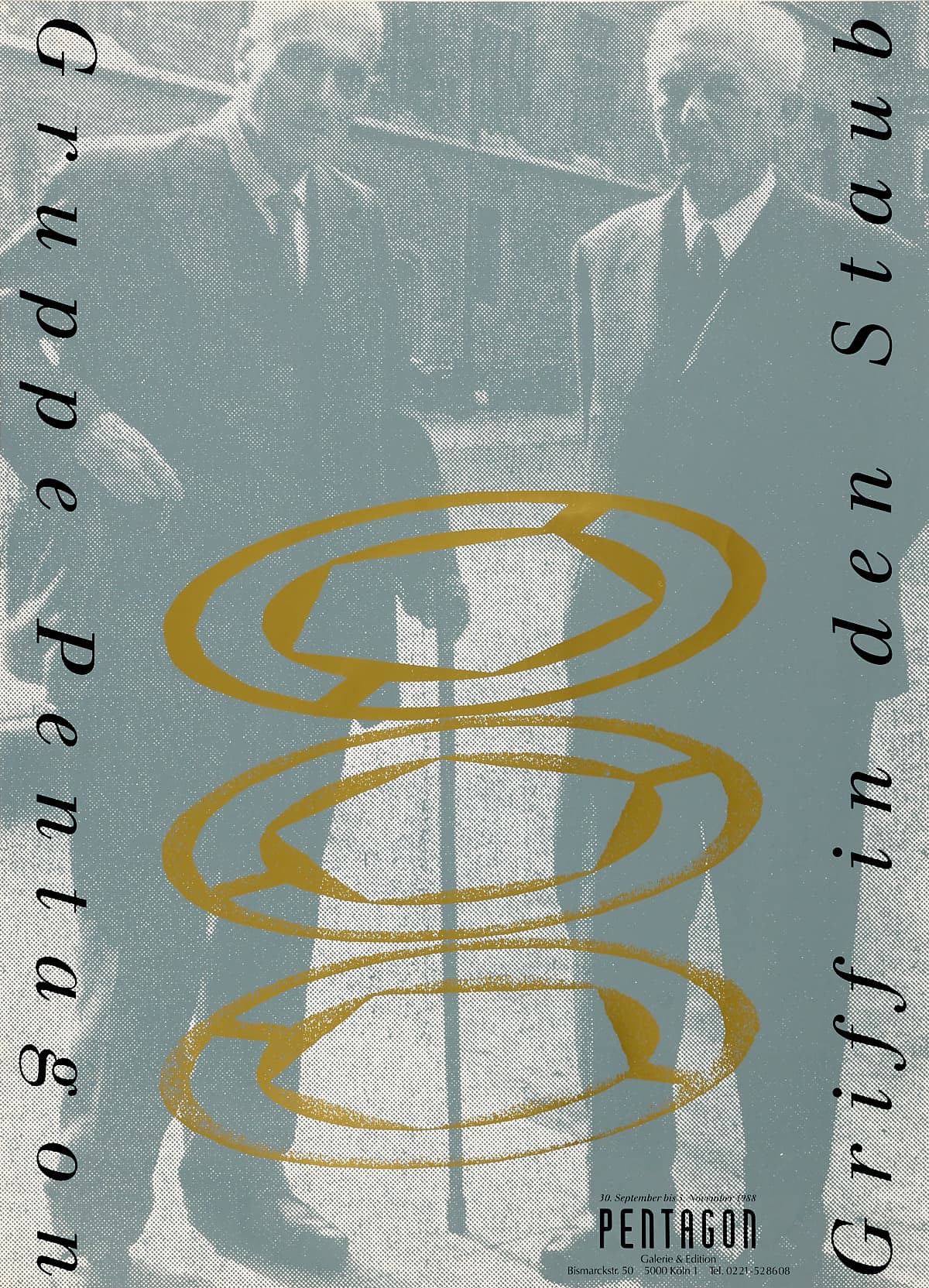
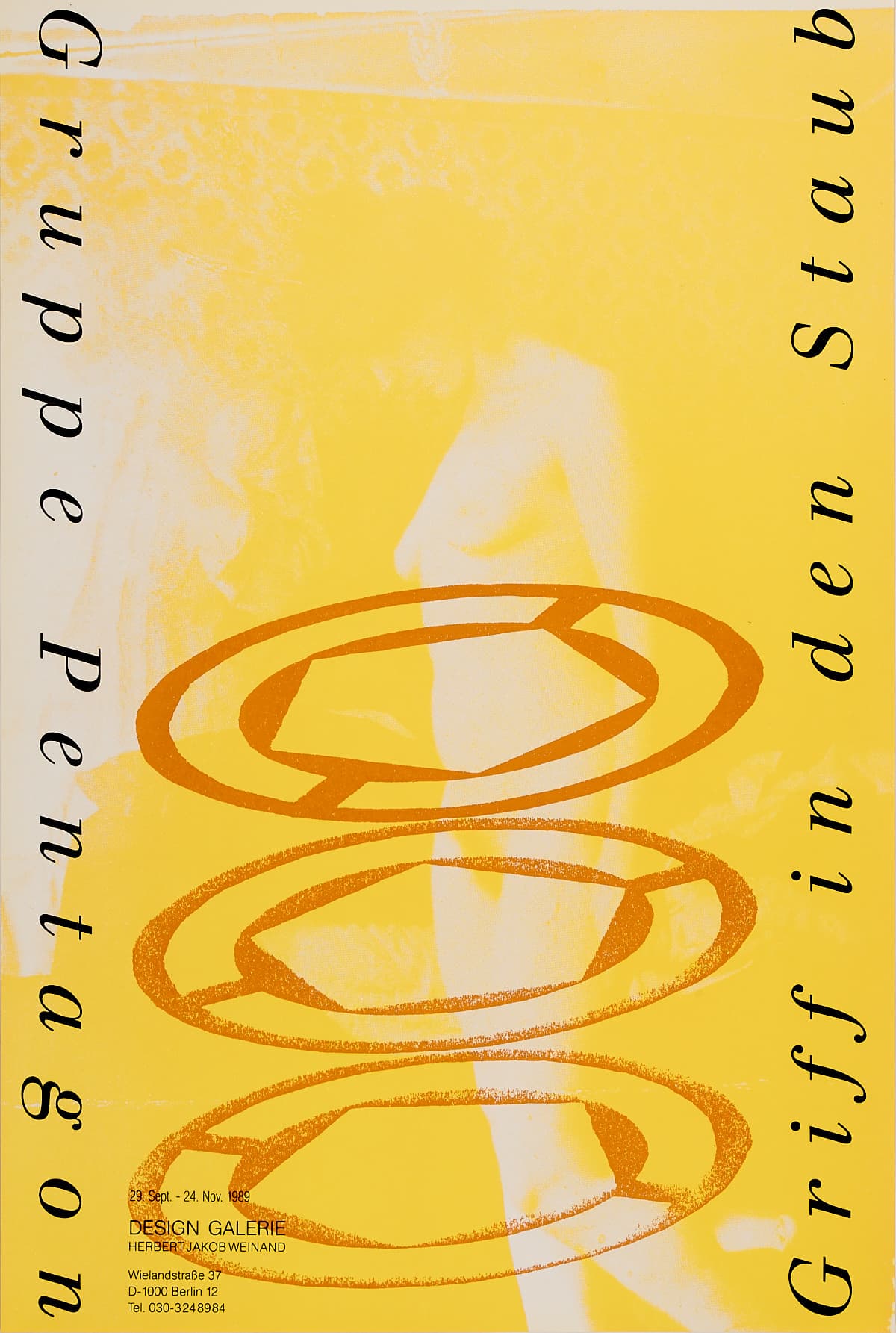
Dedicated to Pentagon Gruppe, this retrospective exhibition immerses the visitor in the raw, cold, and metallic universe of the German collective. Founded in Cologne in 1985, the group brings together Gerd Arens, Wolfgang Laubersheimer, Reinhard Müller, Ralph Sommer, and Meyer Voggenreiter. In contrast to the conventional aesthetic inherited from the Bauhaus, these five designers develop an informal language in which the object is no longer at the service of function, but becomes the direct expression of an idea. Their pieces, often uncomfortable, sometimes mobile, and always unsettling, reflect a way of thinking that breaks free from established norms, placing drawing above all else. “Form before function, style above all” has never been truer than with Pentagon Gruppe.
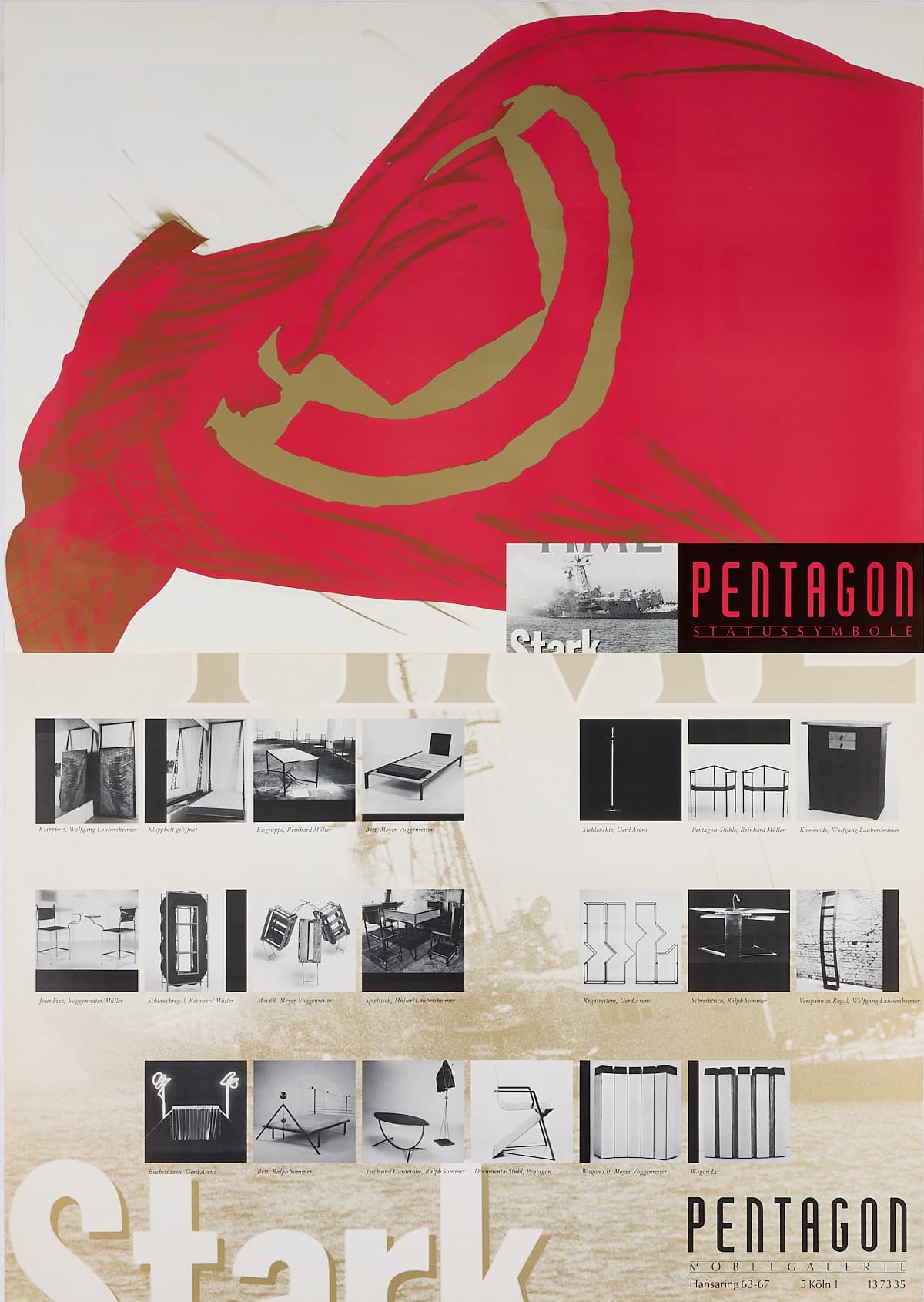
At the dawn of the fall of the Berlin Wall, in a Germany still divided and not very open to design experimentation, Pentagon bypassed the absence of collaborative industry and media outlets by creating its own gallery. Producing their pieces themselves, whether unique or in very small series, they embrace an unfinished aesthetic: raw metal, visible welds, sanding marks, humble materials. Far from the bright colors of Memphis, they cultivate a cold, almost warlike radicality, defined by tension and a rejection of codes.
A raw and unprecedented selection: between prototypes and historical works
The exhibition brings together more than twenty major pieces, illustrating the uniqueness of a group with no equivalent, whose approach oscillates between post-industrial sculpture and a critique of aesthetic standardization.
Folding bed (1987)
Disregarding all comfort, Pentagon brings brutality into the collectors’ bedroom. This fold-down bed is mounted on a compass-like structure running from floor to ceiling, not without recalling the functional panels of Jean Prouvé. Sleep is elevated to the level of performance between these sharp lines, as an invitation to disrupt one’s habitual comfort.
Amazonas desk (1988)
Composed of a stoneware top from the Ruhr River, steel, and a water-circulation system, the desk becomes for them a true field of experimentation. Behind its simple form, the addition of a flow of water and greenery transforms the piece into an almost living element, halfway between furniture and installation, like an ode to great rivers.
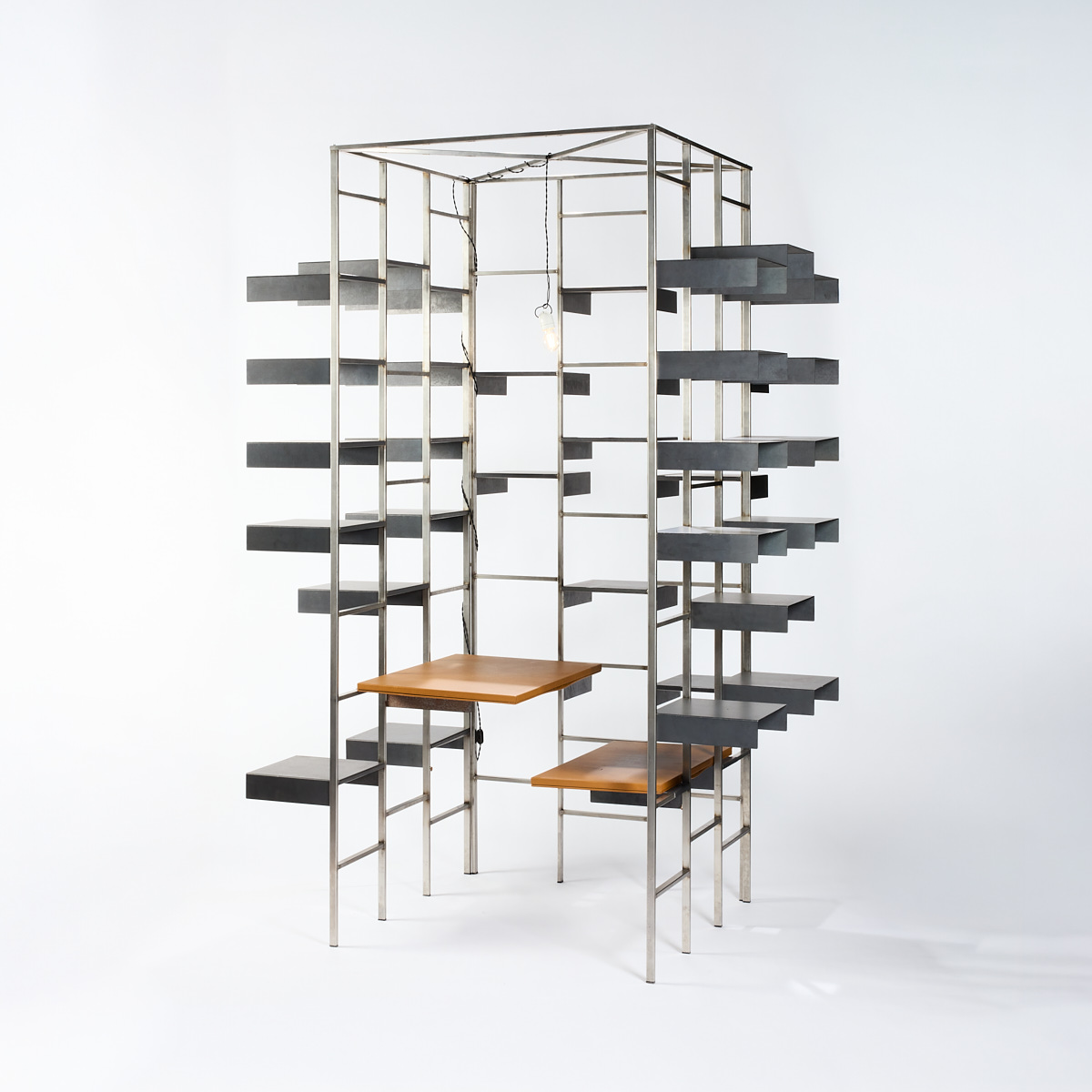
Bookcase Shelf Unit for Cheap Glasses (1988)
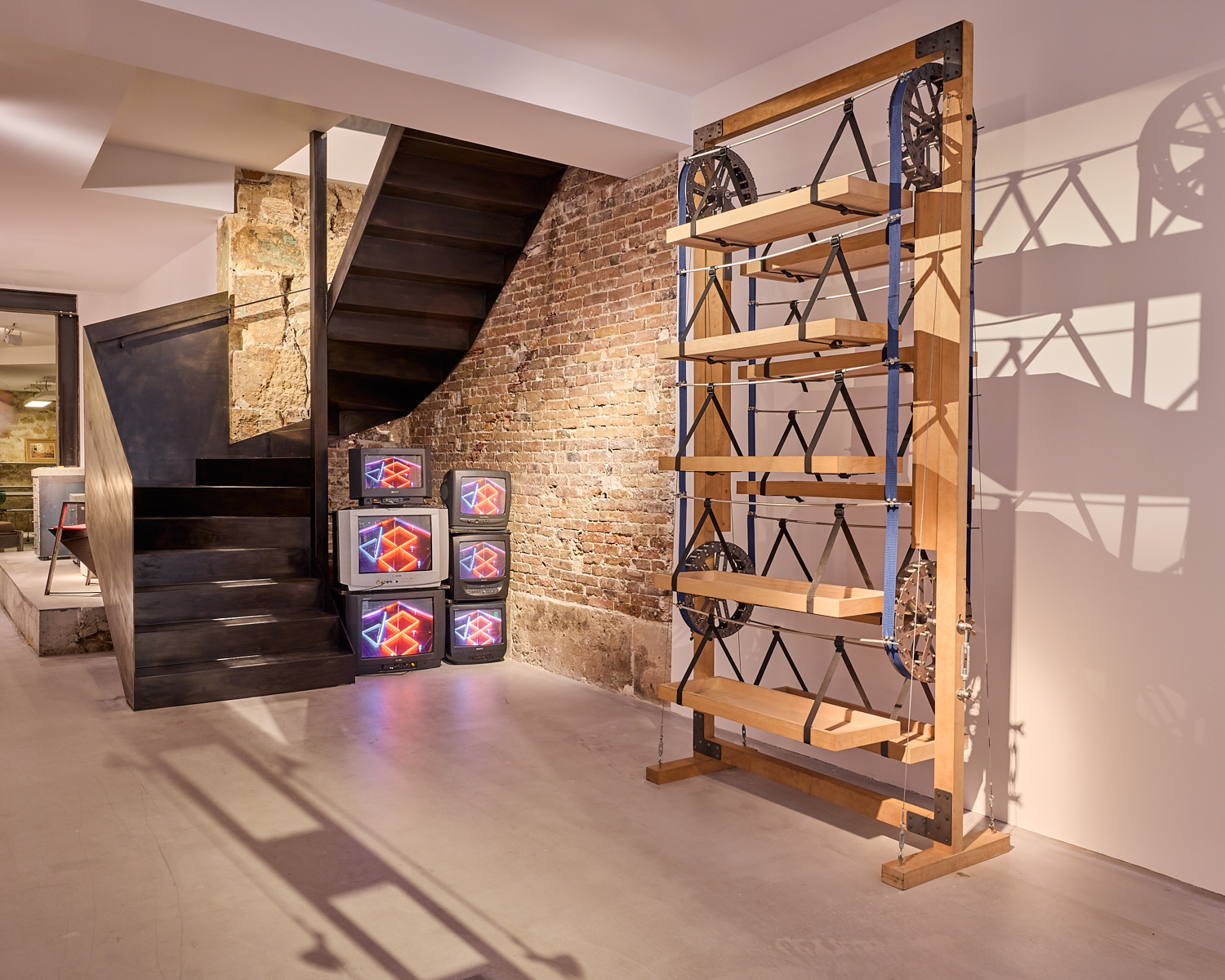
This rare version of a wood-and-metal bookcase highlights the way Pentagon blends mechanics and structure. The shelves are suspended from a four-wheel system, transforming this bookcase into a true experimental rotating machine, presented at the MAKK Cologne during the exhibition Design Gruppe Pentagon in 2020.
Table for the Café Casino (1987)
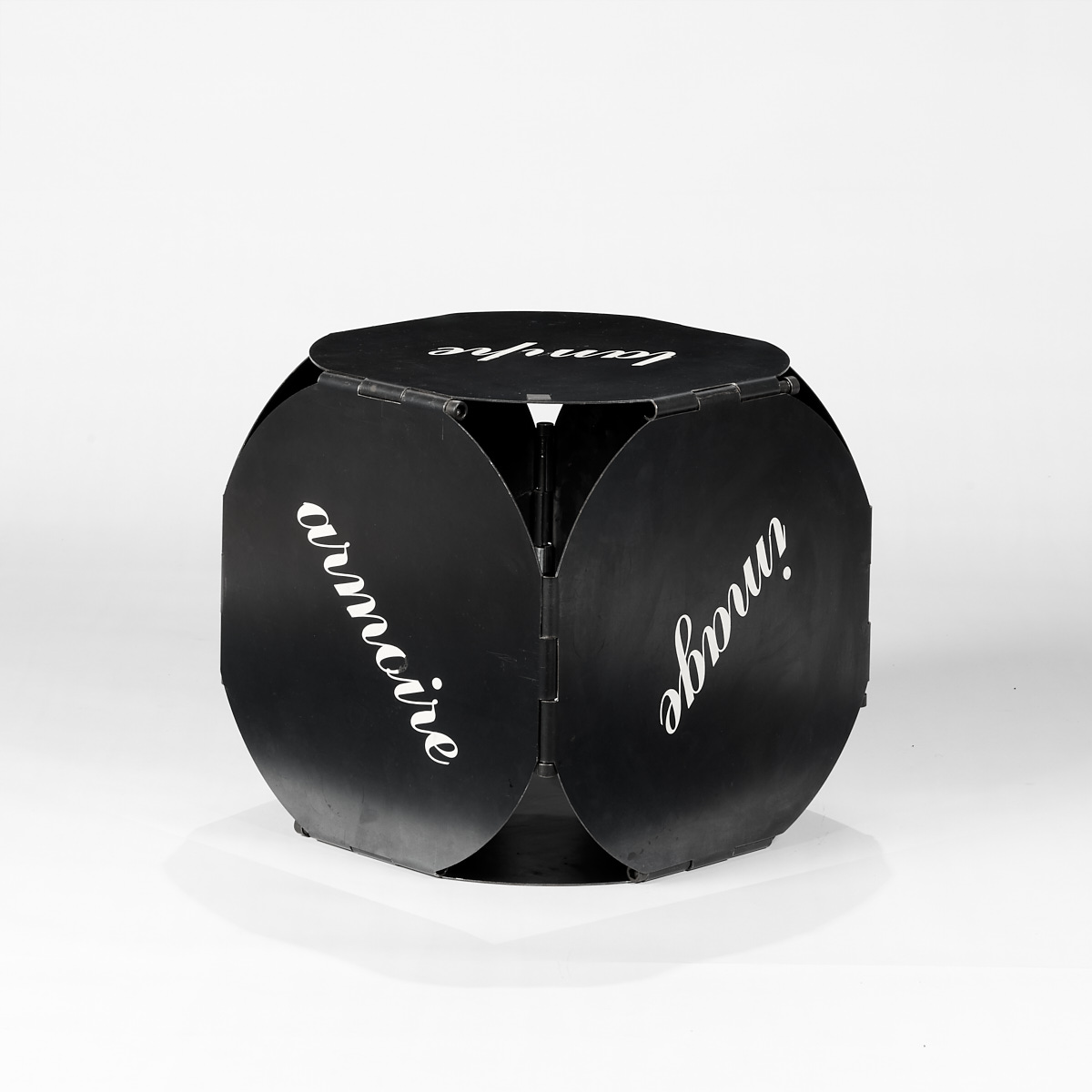
Created by Meyer Voggenreiter for Documenta 8 in Kassel, where Pentagon had designed the Café Casino, a major project in their trajectory. Conceived as a space for encounters and experimentation, this café, fully furnished by the group, quickly became an emblematic and itinerant place, helping to establish their international recognition.
Pulp Galerie: form before function, style above all
Specializing in design from the 1980s to the 2000s, Pulp Galerie was born from the collaboration between Paul Ménacer-Poussin and Paul-Louis Betto. Driven by their passion for radical and sensual aesthetics, they offer an eclectic and harmonious selection.
With Pentagon Gruppe: Silent Brutality, Pulp Galerie inaugurates its new address at 30 rue de Seine, asserting a clear direction: celebrating radical creators and their imaginations, which make design a fully fledged field of expression.