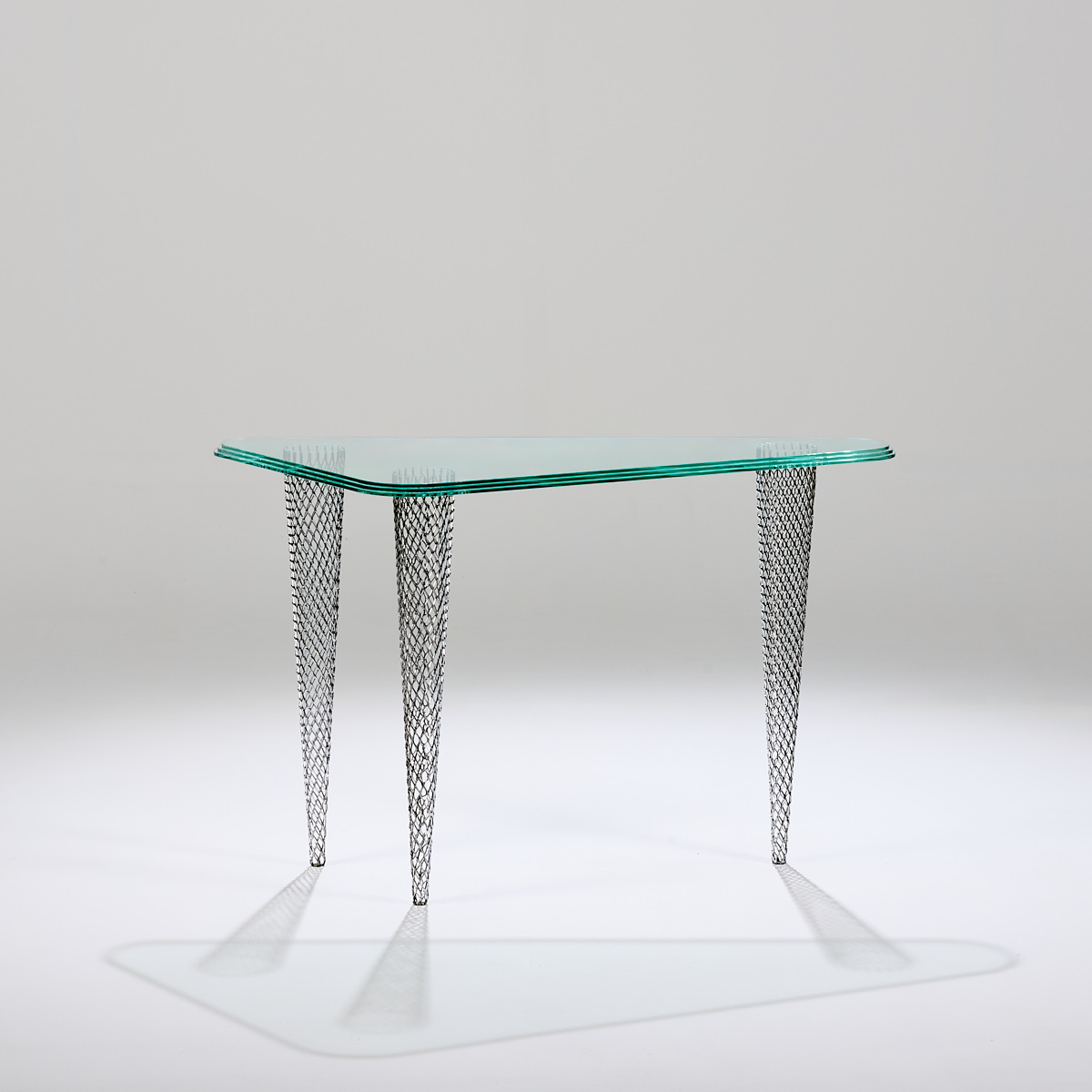
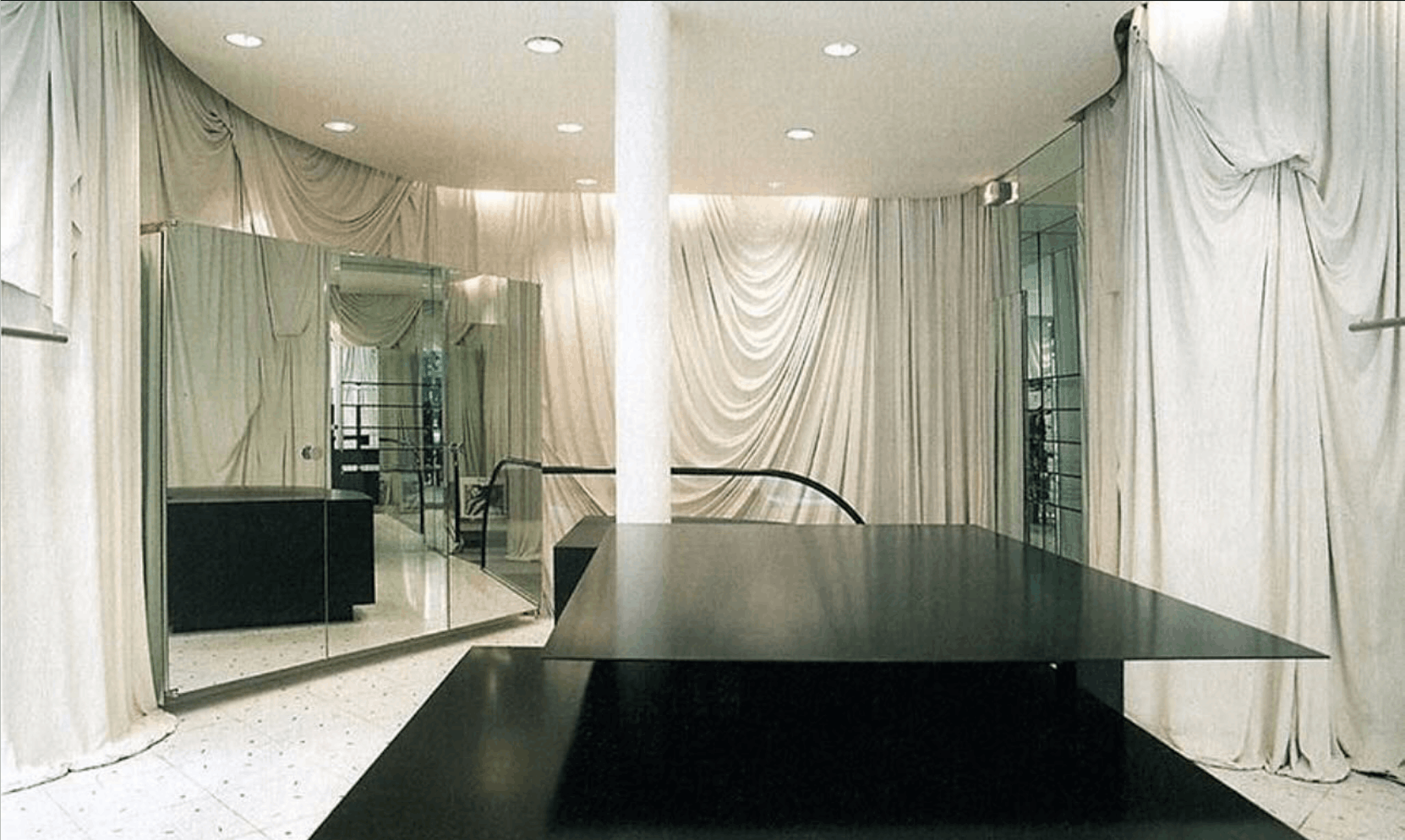
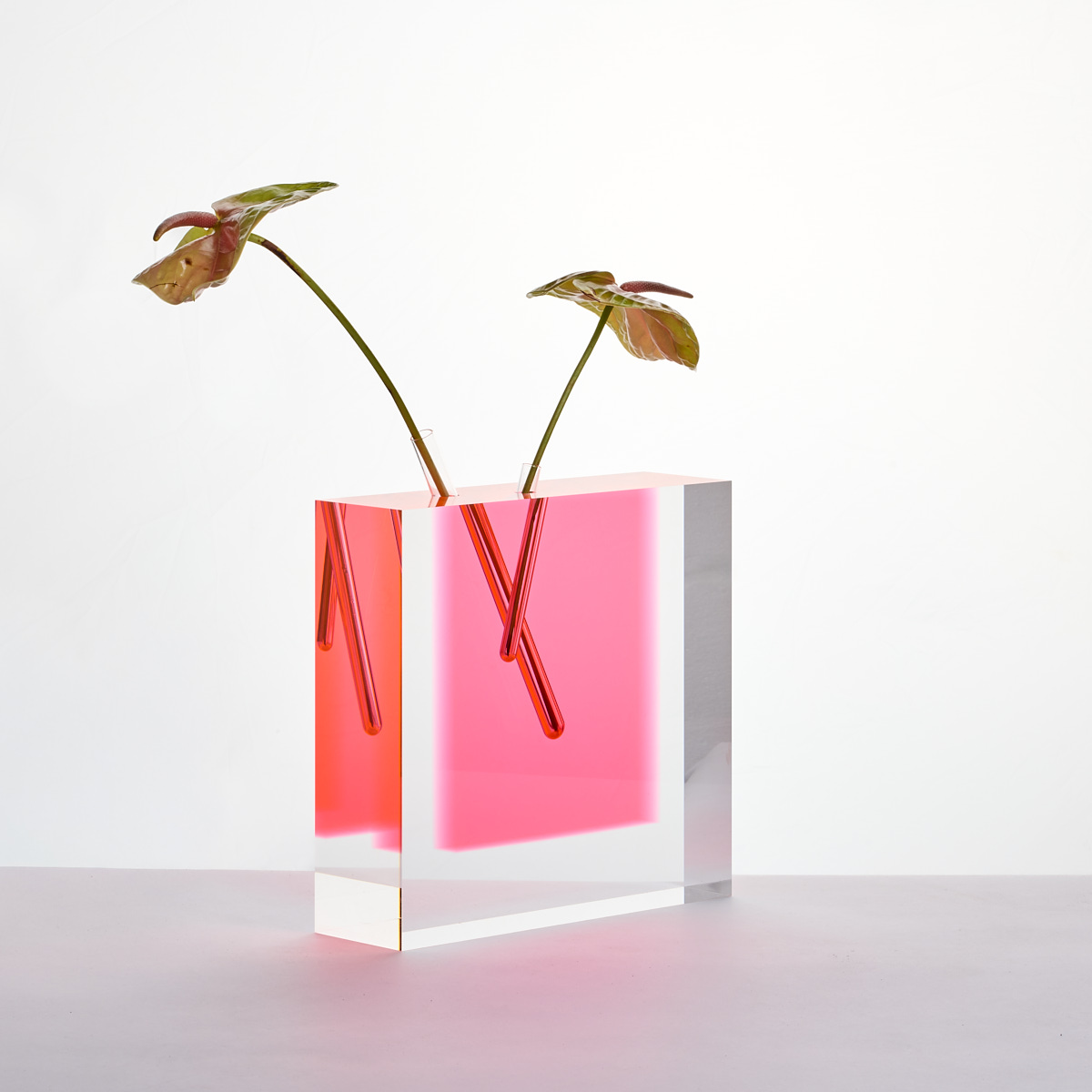
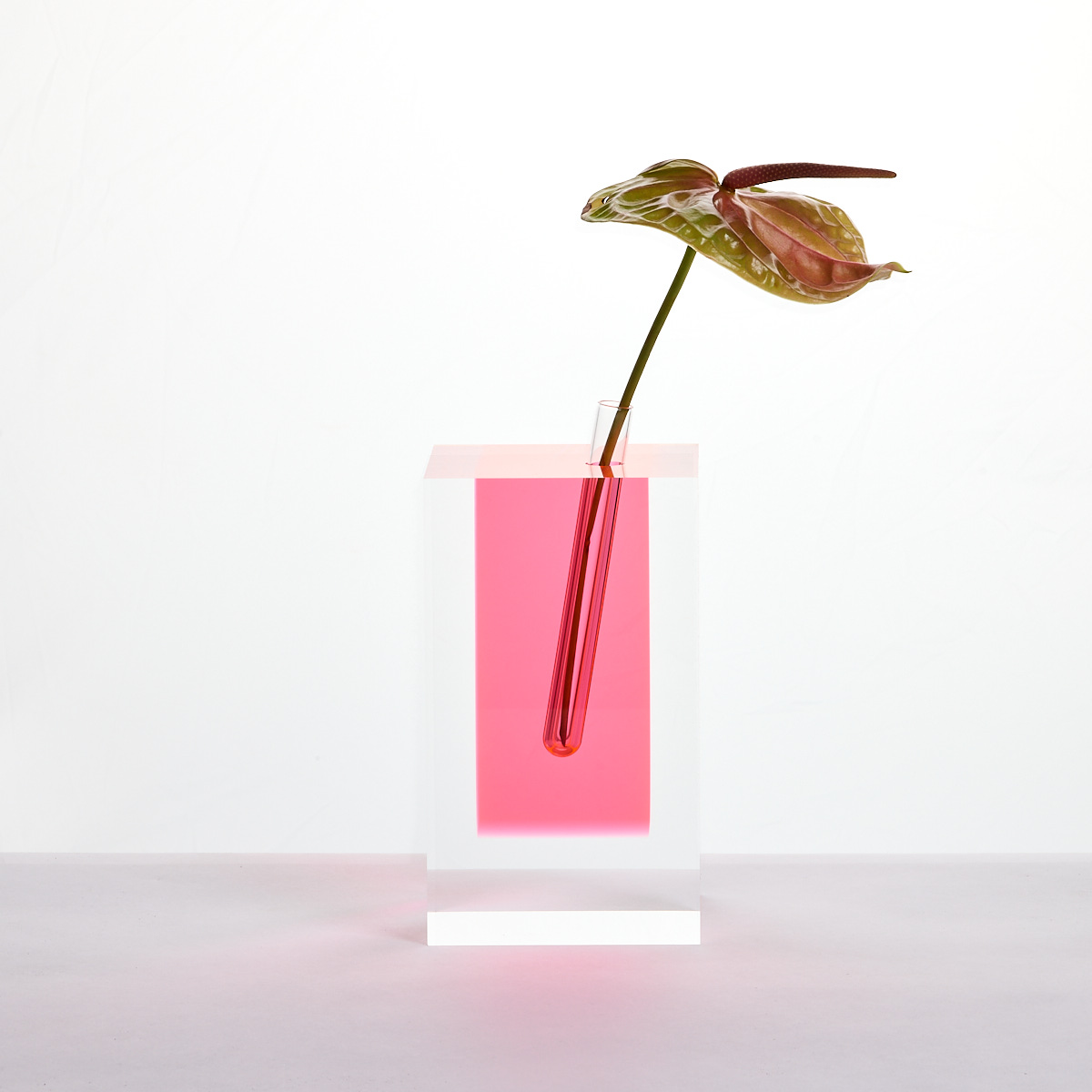
Lightness, poetry, transparency. These are the words that echo endlessly when one speaks of the late Shiro Kuramata.
A contemporary of Rei Kawakubo, Issey Miyake, and Tadao Ando, Shiro Kuramata embodied the creative surge of postwar Japan. In his hands, sheet metal, plastic, and glass became shimmering, dreamlike materials, standing in stark contrast to the industrial logic of the time.
An admirer of Ettore Sottsass and the playful forms of Italian design, Shiro Kuramata eventually joined the Memphis Group in 1981. With that, he stepped away from modernism and embraced a more expressive, emotional design language.
Yet Shiro Kuramata would never be as bold or brash as his Italian peers. Where they asserted through color and volume, he dissolved into light, letting the material speak in whispers. Matter became a drifting veil, its shape revealed only through shadow.
Nowhere is this more evident than in his How High the Moon chair (1986), made of expanded steel mesh, a piece that appears to float, defying material expectation and inviting light to be its co-creator.
Shiro Kuramata believed in the continuum of the arts. Influenced by Beuys, Duchamp, and Judd, he liberated himself from distinctions between fine art and decorative art. To him, it was all one and the same.
Whether in design or architecture, Shiro Kuramata constantly blurred boundaries, offering works steeped in splendor and quiet poetry. His Glass Chair (1977) and Miss Blanche (1986) – nearly a decade apart – perfectly capture his devotion to transparency, lightness, and a delicate, elusive minimalism.
This taste for forms that were both pure and fantastical persisted throughout his life. As early as 1970, he had already created Furniture in Irregular Forms Side 1 (1970), a vertical chest of drawers where each drawer curved unexpectedly challenging perception and delighting the eye.
Though he collaborated with Cappellini in the 1980s, Shiro Kuramata never sought mass appeal. His creations remained unique, almost unreal. Under his touch, matter became a cloud, a glimmer, a mirage.
For Shiro Kuramata, design was above all emotional – never to be reduced to mere function.
Pretty convenient, we do feel the exact same.