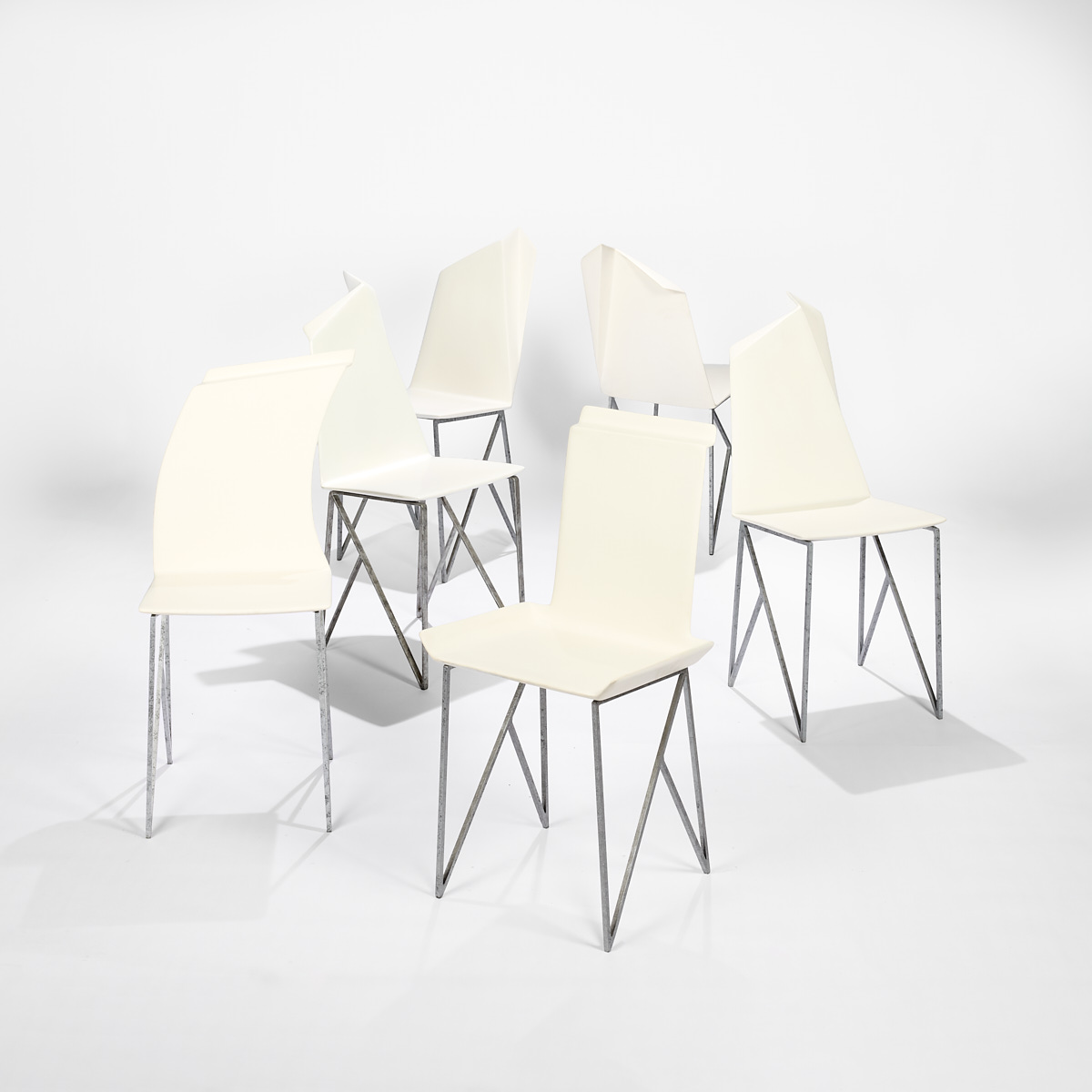
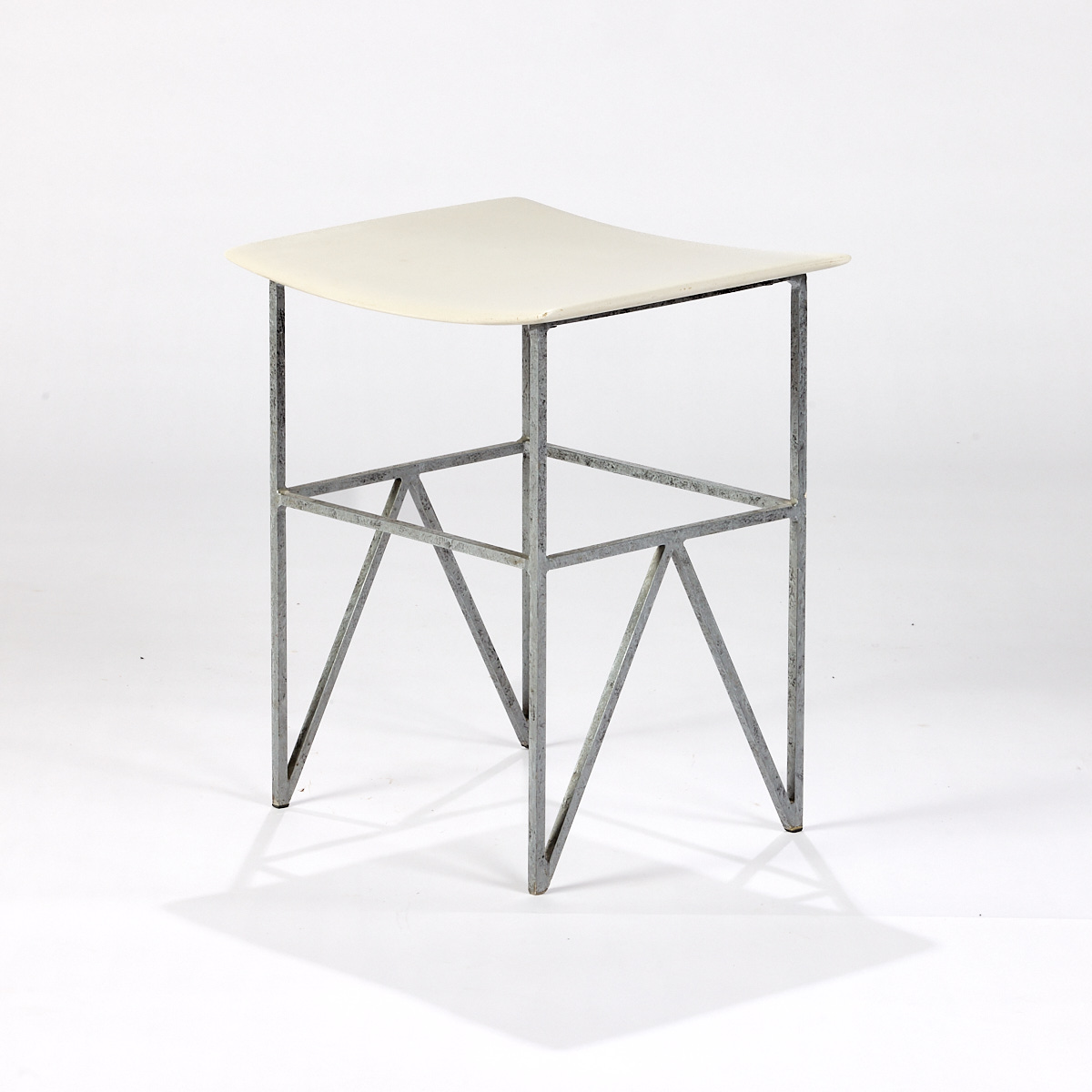
Yet his work, although one hesitates to call him a designer, stands out for its deep formal innovation in the use of light and materials.
Yves de la Tour d’Auvergne’s approach echoes that of early 20th-century masters such as Degas, Gauguin, Matisse, Derain, and Picasso. All of them contributed to a revolution in the relationship between nature and space in art. Similarly, Yves de la Tour d’Auvergne conceives of his medium as a means of altering our perception of the world. His aim is not to decorate, but to sculpt space.
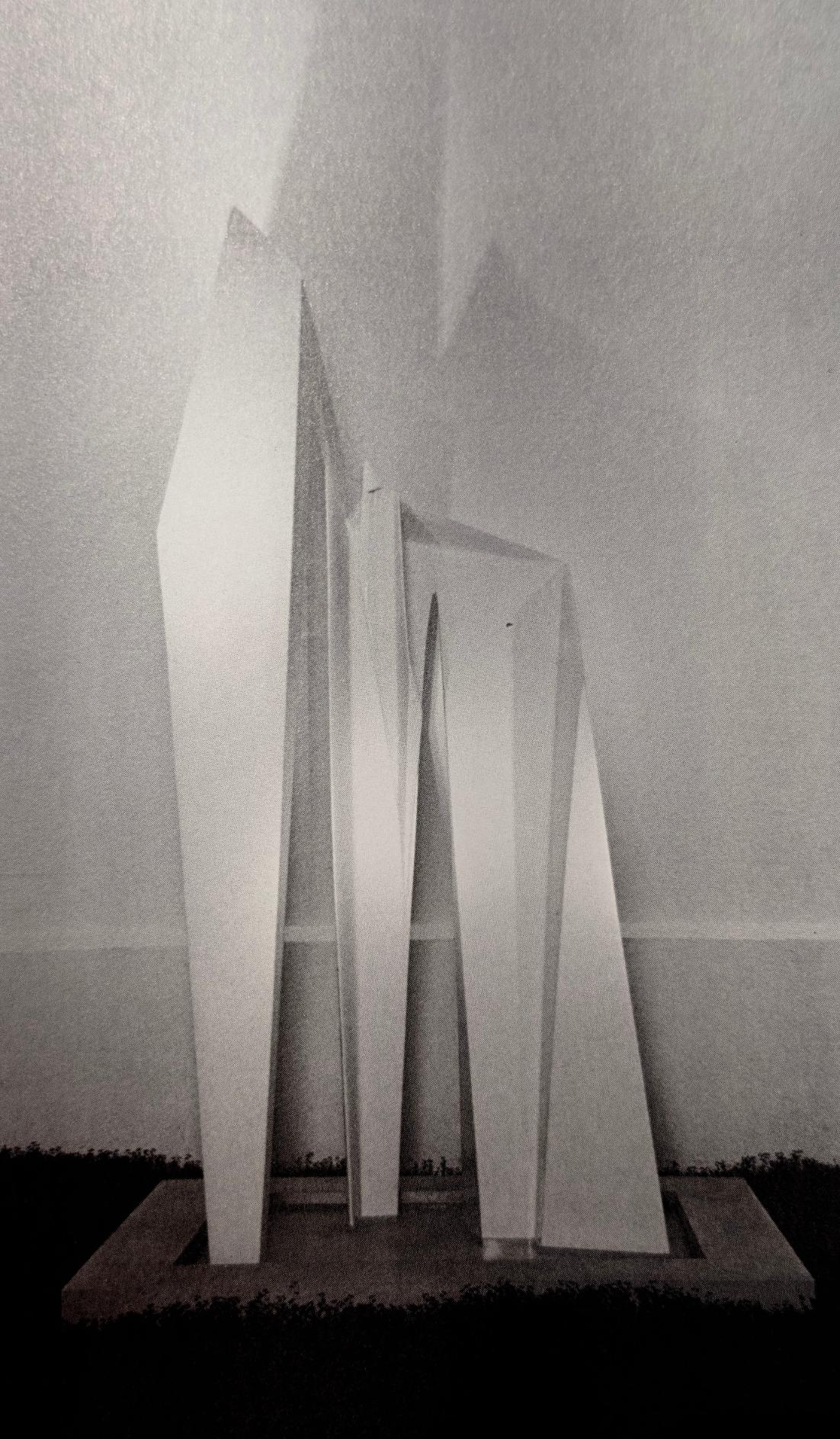
A perpetually searching artist, Yves de la Tour d’Auvergne readily explores marble, metal, resin, wood, mesh, or even cardboard in his works. His lines remain open, sometimes fractured, above all, they express ambiguous dimensions. His artistic objective is to create forms that engage in a dialogue with light.
Yves de la Tour d’Auvergne saw his work as a true challenge to reality itself. His art continuously pushes against imposed constraints through the use of vibrant, suspended forms, somewhere between rigor and freedom.
And while his sculpture might be described as experimental, it is always radiant. His works are simultaneously surfaces and volumes, lines and light. They speak to their surroundings.
This statement rings especially true when one recalls the Ellipse Pise table (1994) with its six angled legs. These columns of white marble powder reflect both light and glass, generating a lyrical, romantic atmosphere so typical of the artist.
Though Yves de la Tour d’Auvergne created tables, sofas, and armchairs, these objects do not fall within the realm of decorative design. Take the Alpha sofa (1982), for instance, its angular, sharply defined geometry is far too assertive to be considered mere furniture. When faced with this piece, there is no doubt: you are looking at a work of art.
These pieces, it must be said, are first and foremost conceived as sculptures. And it is for this reason that Yves de la Tour d’Auvergne refused the title of designer, preferring instead that of architecte décorateur. He positioned himself as a sculptor of interior space, working with the demands of light and the experimental nature of form, to create a pure, pared-down plastic vocabulary, often monumental, yet always inhabited.