Hilton McConnico : la passion du cactus (1985 - 1990)
A true American melting pot, Hilton McConnico’s Cactus series draws on the imagery of his native Tennessee while reflecting the sophistication he acquired through his life in Paris. McConnico plays with the aesthetics that permeated American cinema and popular culture in the 1980s: neo-Baroque opulence, vibrant colors, and an unabashed taste for the spectacular.
His universe is built on the encounter between seemingly disparate elements. Botanical motifs, American references, precious materials, and ornamental details come together in compositions that evoke both the art of living and the world of film sets. More than a set designer, McConnico created entire worlds in which objects themselves seem to take part in a mise-en-scène.
The Cactus motif, developed from 1985 onwards and notably interpreted for Daum, Hermès, Cristallerie Saint-Louis, and Formia, is among the most emblematic expressions of this universe. From 1987 onwards, it appeared across a series of furniture pieces and objects, including armchairs, daybeds, sofas, rugs, bottles, and crystal tableware.
For McConnico, the cactus became far more than a simple decorative motif. It acts as an instantly recognizable symbol of the American West, reinterpreted through a sophisticated and distinctly Parisian vocabulary.
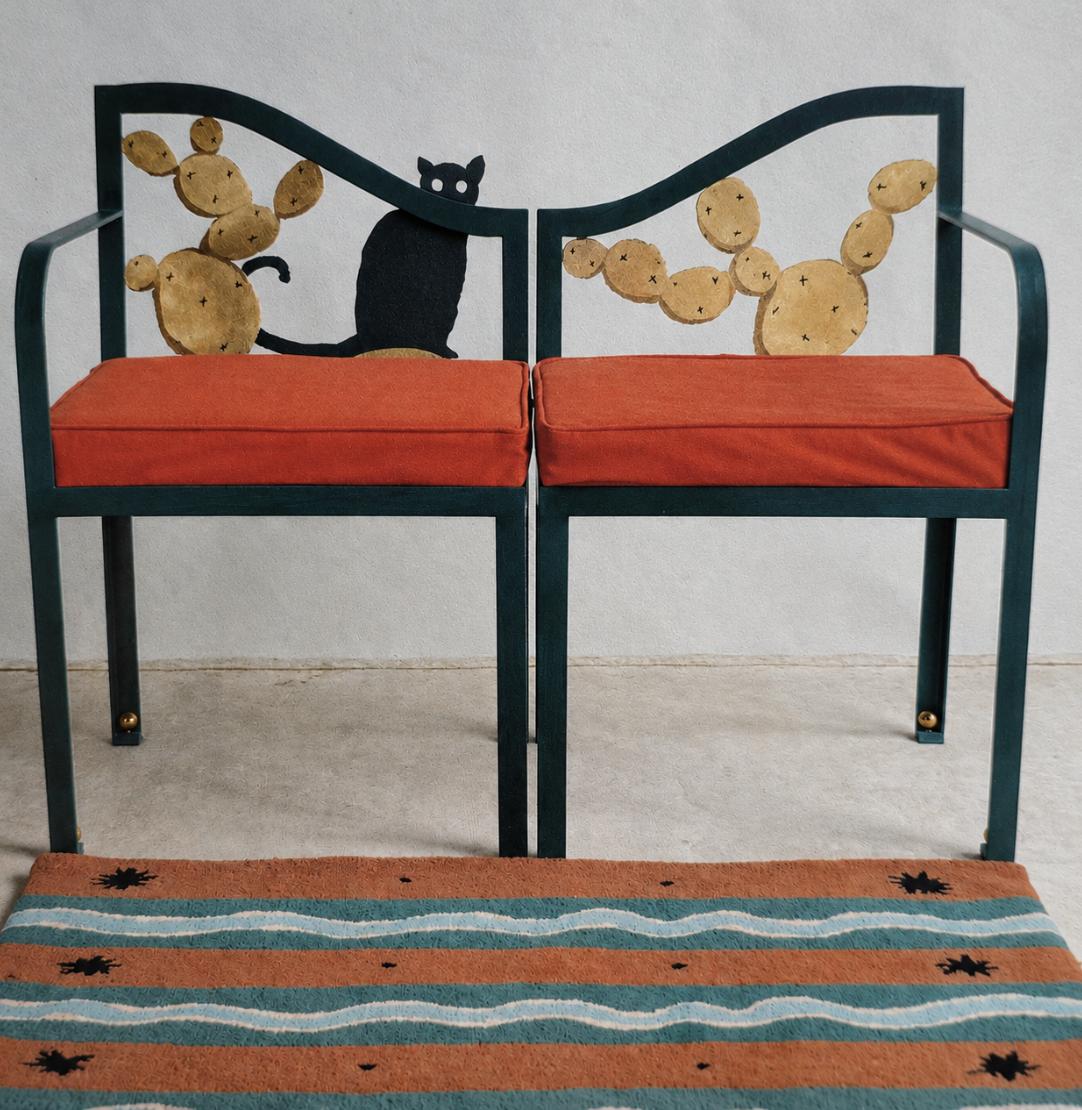
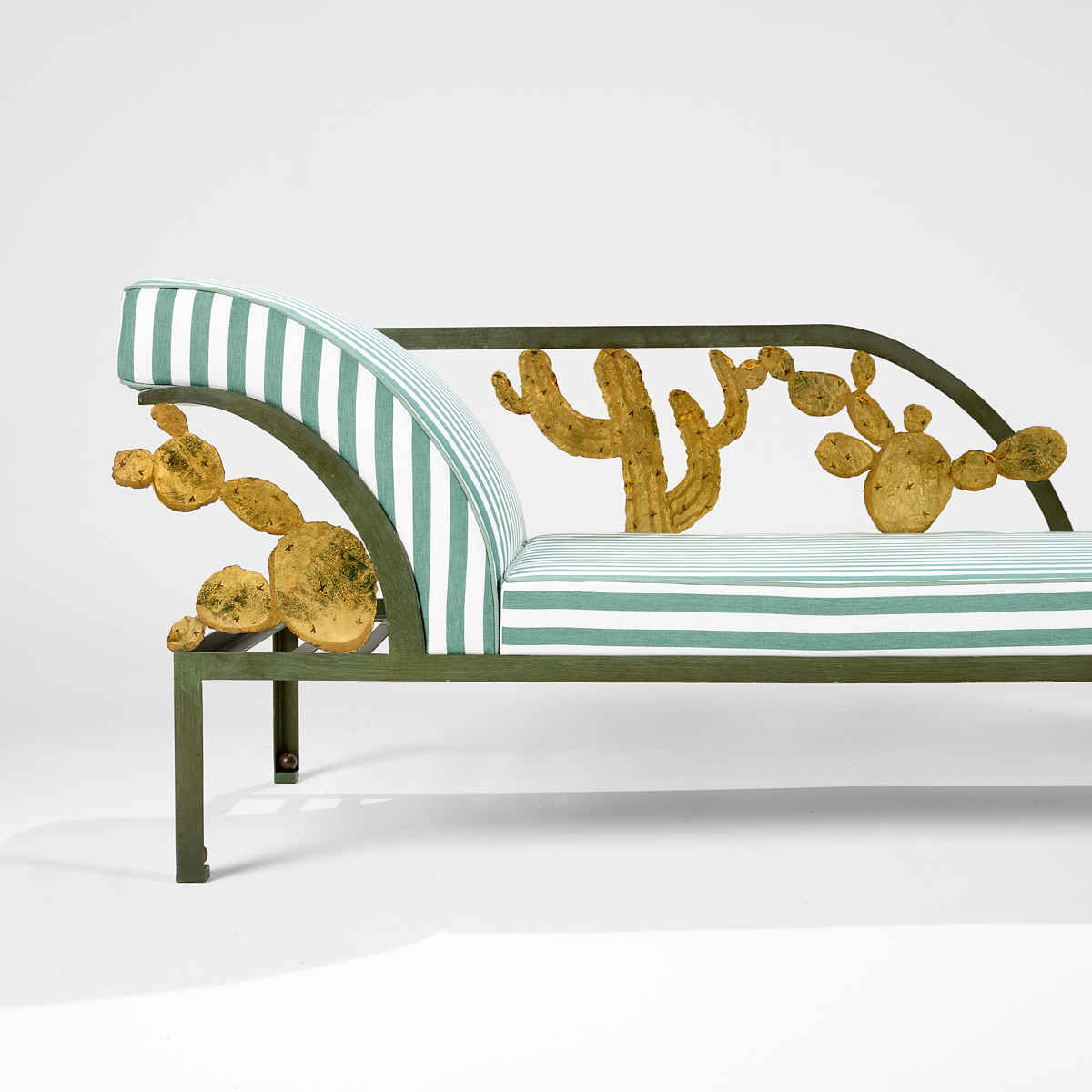
The Cactus “petit canapé de repos,” created for Titien Éditeur in 1988, is a particularly striking example. Its backrest evokes a veritable garden of gilded metal cacti, transforming the seat into a statement piece. The bronze-green painted iron, combined with gilding, heightens this tension between popular imagery and decorative refinement.
The collection of iron chairs, armchairs, and daybeds, created in 1988 and also produced by Titien, depicts a veritable field of golden cacti populated by cats reminiscent of the famous black cats of Paris. Once again, McConnico creates a genuine cultural melting pot, bringing together American references and the Parisian imagination. The orange upholstery brings warmth and intensity to the ensemble, while the bronze tones and gilded details emphasize an almost theatrical richness characteristic of the designer’s universe.
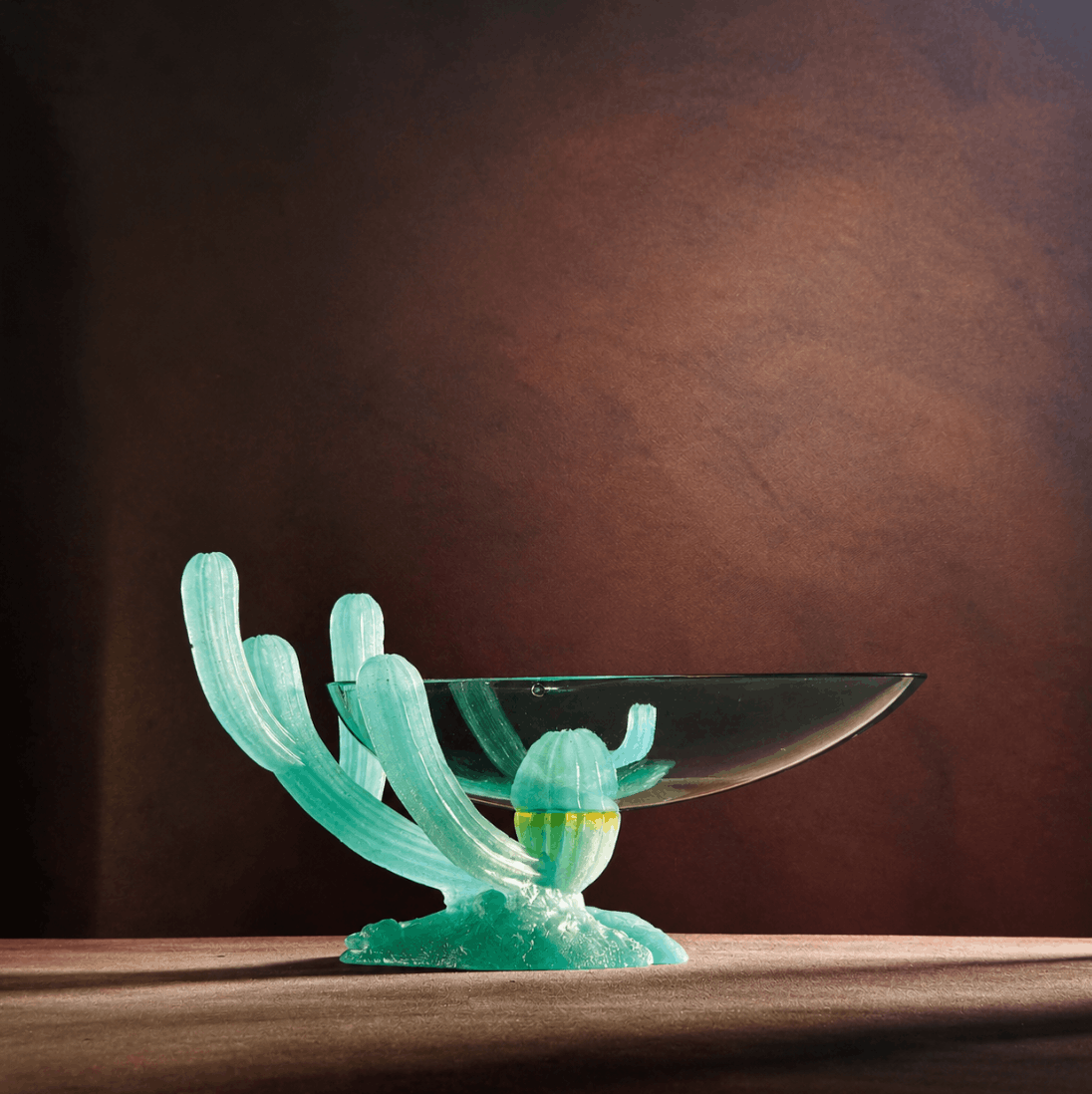
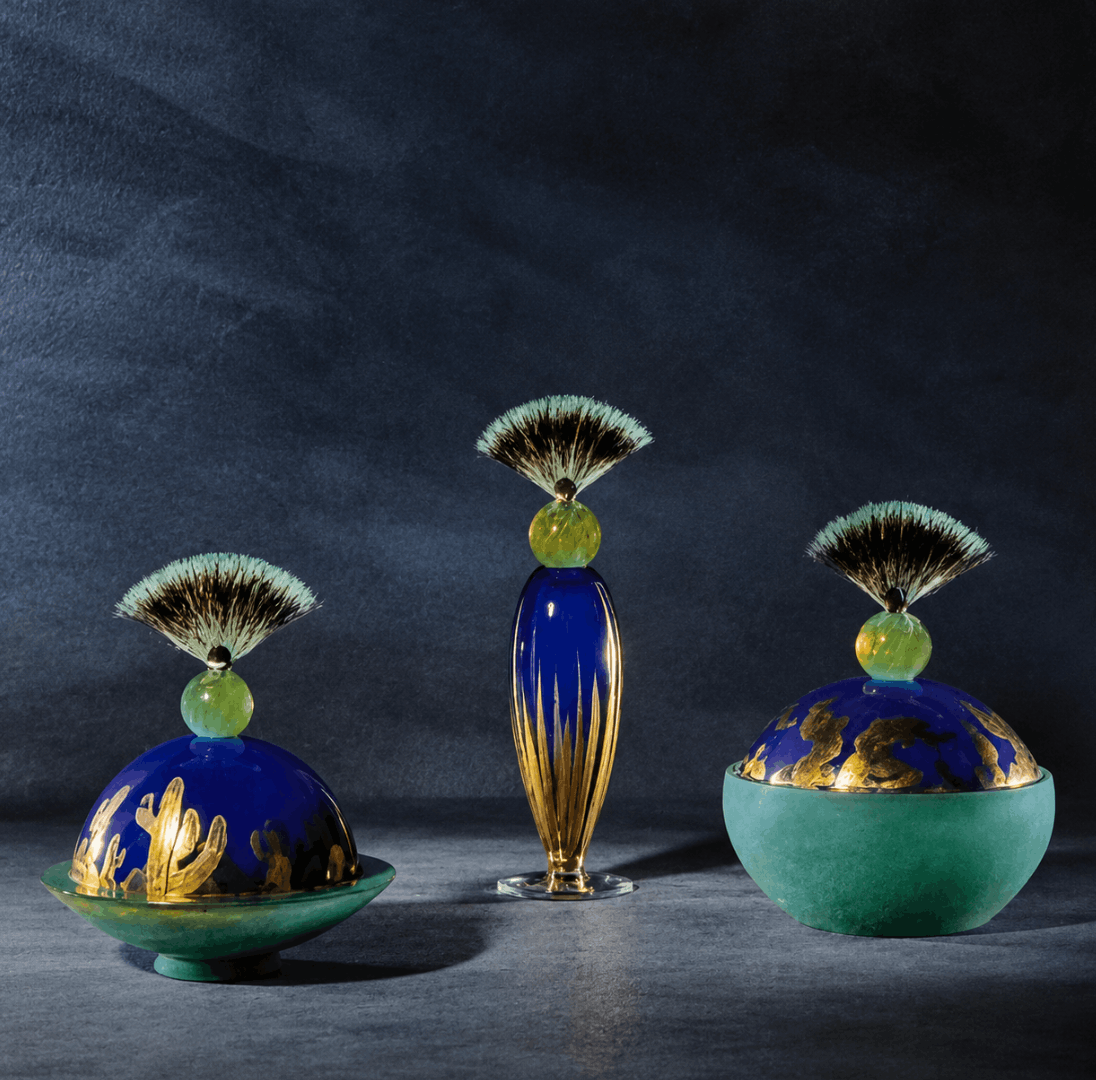
This aesthetic can also be found in the pieces created for Daum: crystal liqueur bottles adorned with pâte de verre cacti; the Arizona and Nevada bowls; sets of green frosted crystal whisky and orangeade glasses decorated with cacti in fine gold; and the Nuit mexicaine vanity set, made of blue crystal enhanced with gold.
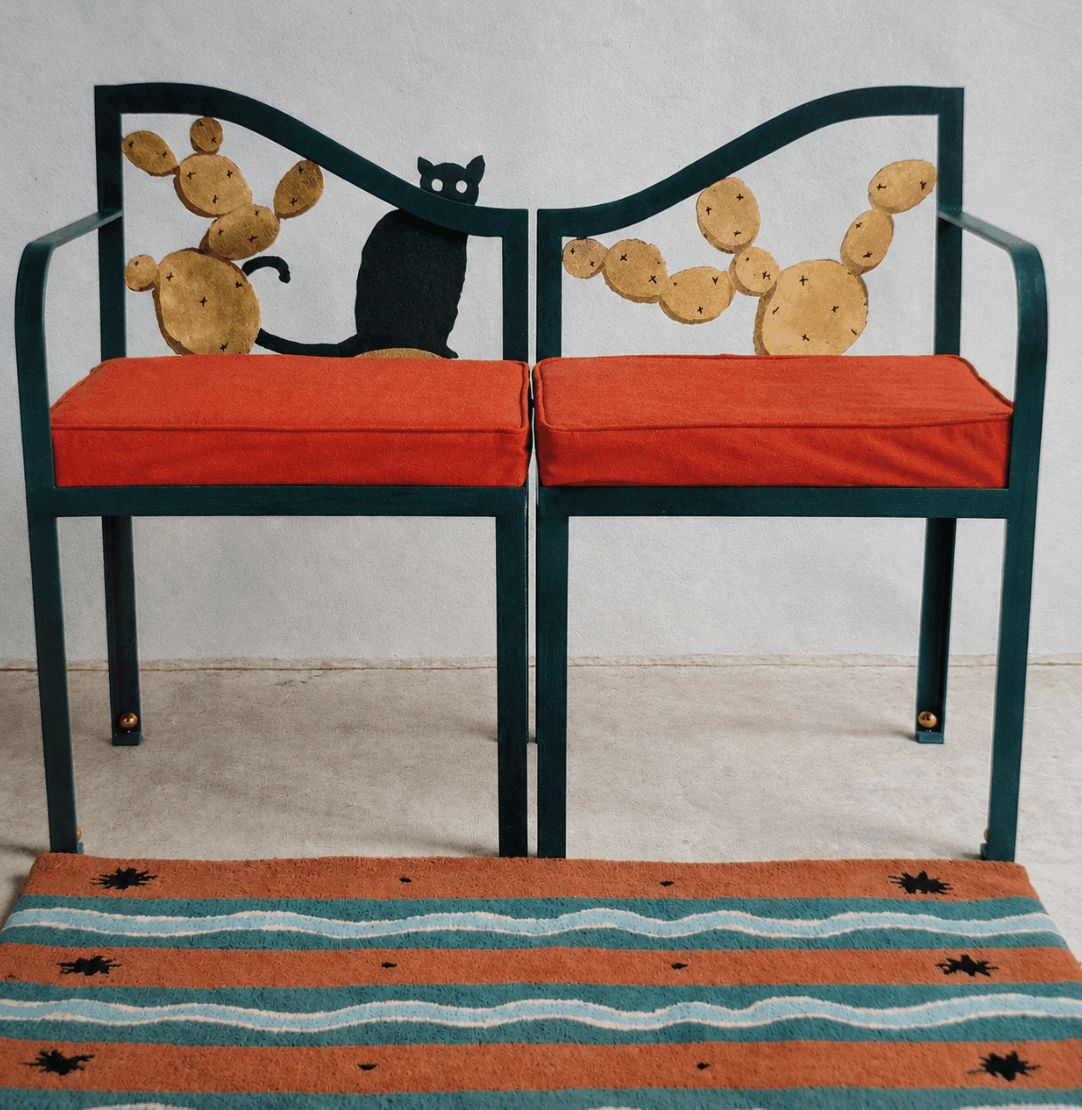
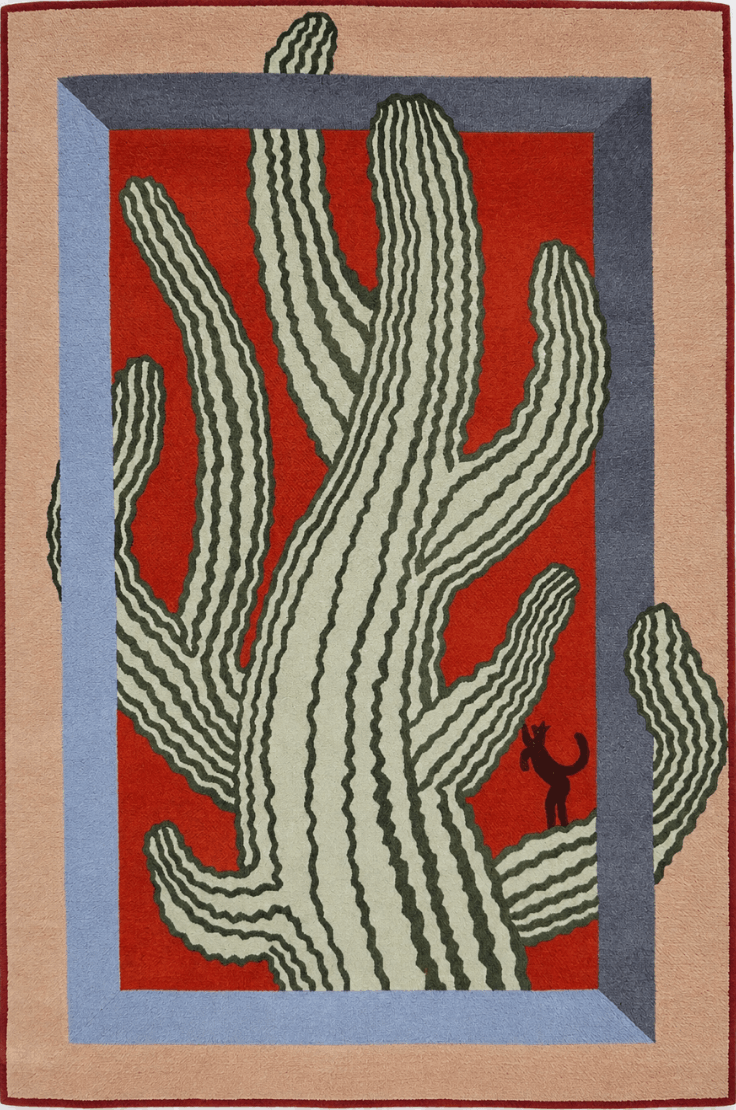
The Cactus rug, handwoven in pure wool and produced in a limited edition of 100 by Art Surface, Sedcome, Paris, in 1987, once again combines the cactus motif with the silhouette of a cat. Its vibrant colors, sinuous contours, and deliberately naïve lines evoke the world of American cartoons while echoing Hilton McConnico’s playful and theatrical imagination. Its artisanal craftsmanship and limited production give the piece a character that is both precious and sophisticated.
Through the Cactus series, Hilton McConnico transformed an emblematic motif of the American imagination into a fully developed decorative language. Between exuberance and sophistication, the cactus becomes the recurring thread of a universe in which popular culture, cinematic references, and Parisian refinement converge. It is a vision of America at once imagined and theatrical, reinvented through the eyes of a creator profoundly shaped by his life in Paris.