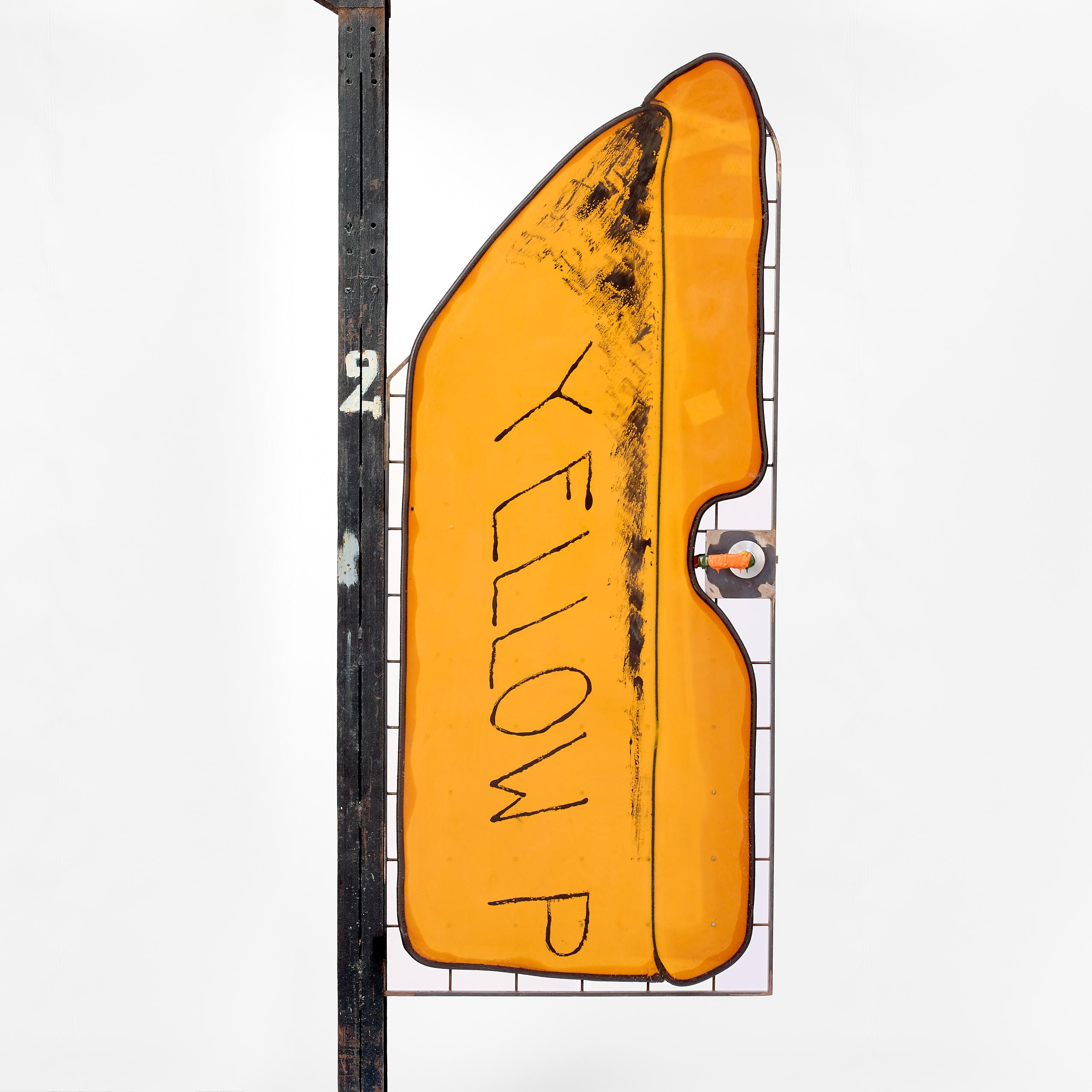
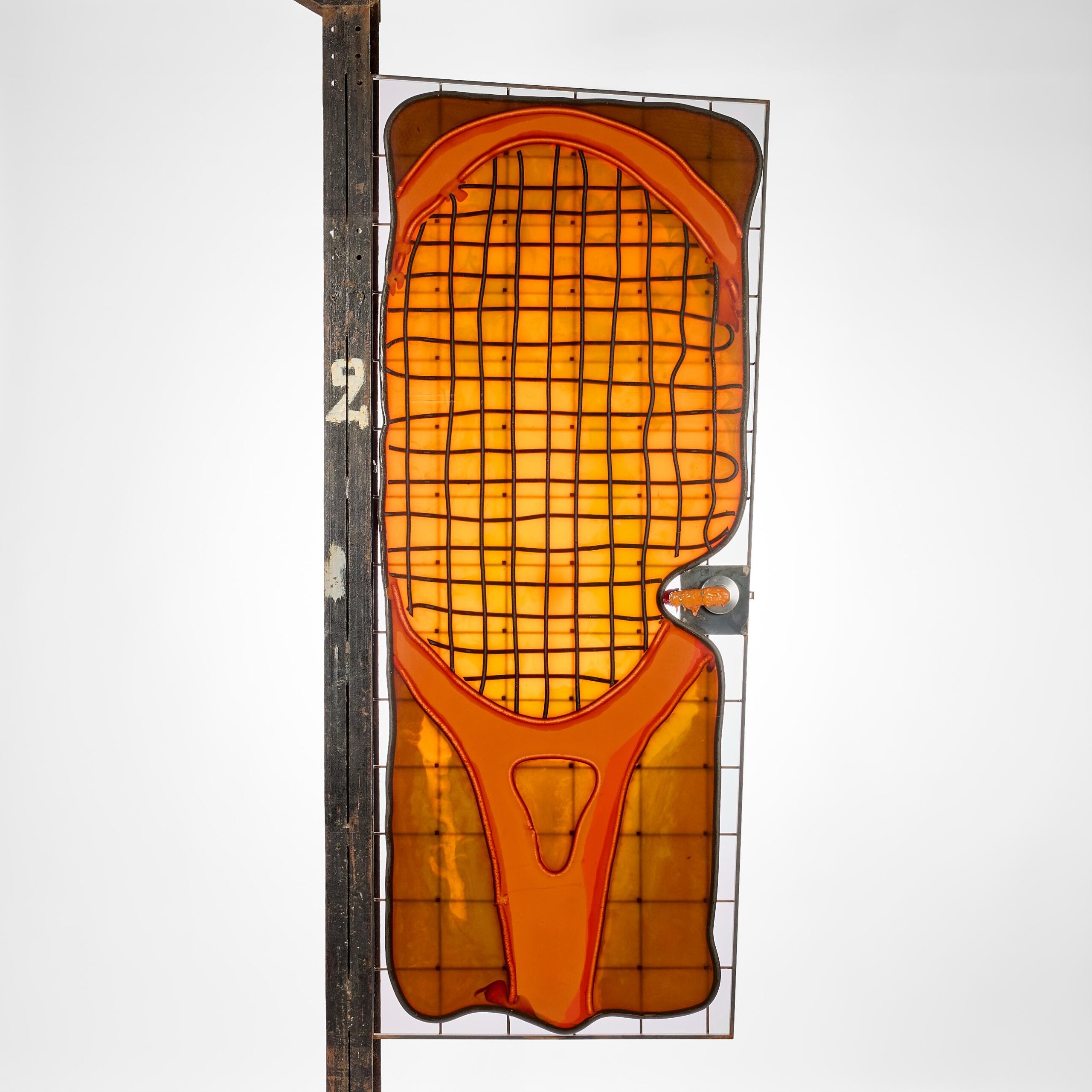
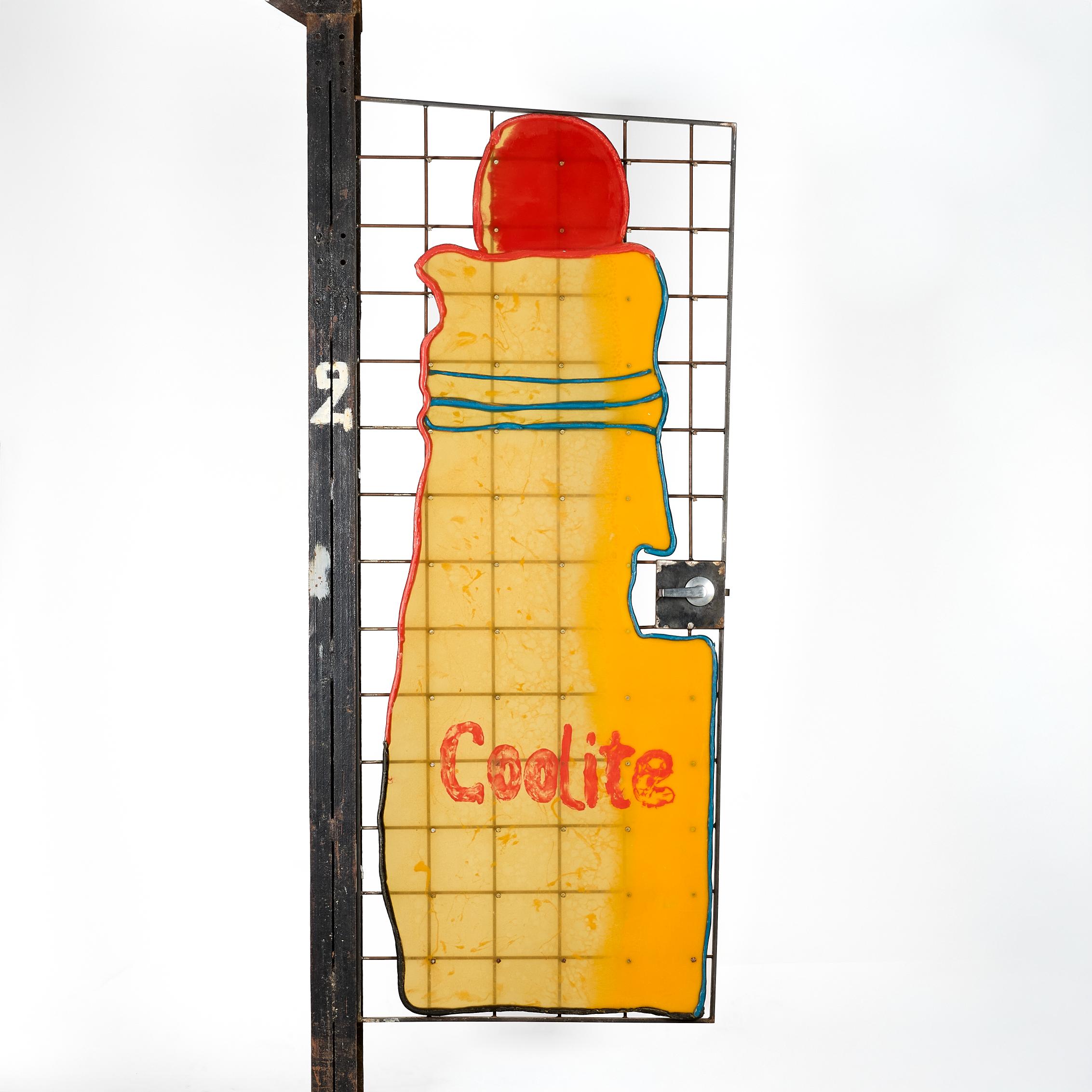
Their asymmetrical surfaces, random perforations, and polychrome finishes instead claim a formal vocabulary based on variation and irregularity.

Produced under the direction of Gaetano Pesce by Mexican workers, the locker doors created for Chiat\Day provide a concrete translation of a central principle in his thinking: “doing badly.” Observing the gradual disappearance of certain artisanal skills, the designer chose not to correct the imperfections of the manufacturing process but to fully integrate them into the work. Irregularities in the material, traces left by tools, or the imperfect gestures of the artisans cease to be flaws that must be corrected. Instead, they become factors of transformation. Within this logic, a series is no longer a set of identical objects but rather a sequence of variations. Pesce therefore speaks of “diversified series”: ensembles in which each piece asserts its singularity and in which true sameness no longer exists.
In this work environment, Gaetano Pesce thus introduces an architecture that resembles a living organism more than a rational system.

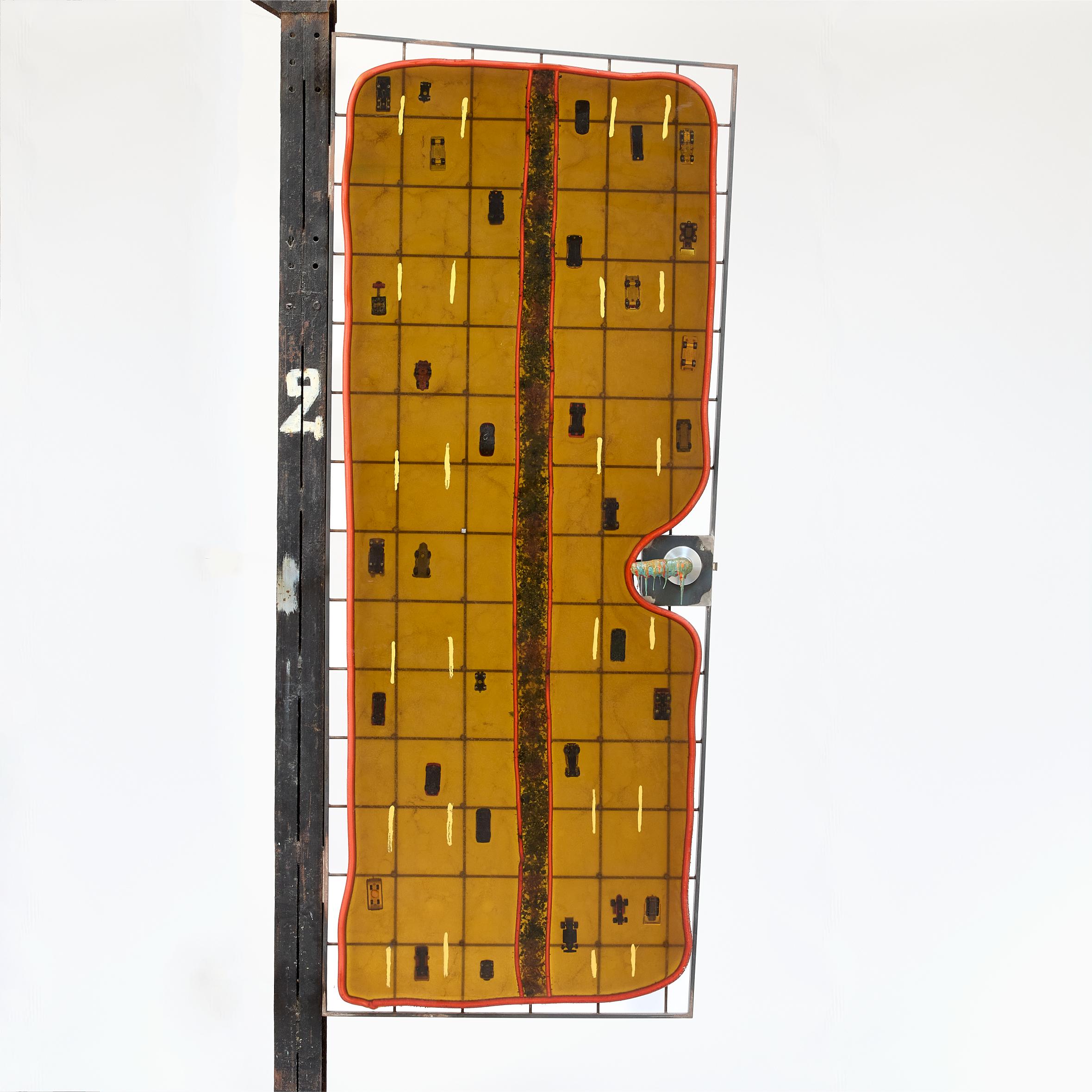
One of the most eloquent expressions of this approach is the Highway Door, created around 1995. Behind a metal grid—the structural signature of the Chiat\Day project—the resin surface forms a veritable highway, punctuated by small toy cars. The most functional architectural element thus becomes a playful, almost narrative scene.

Another striking aspect of these doors lies in the shapes they adopt. Many of them evoke familiar objects: a bottle, a telephone, a shirt, a hand, a foot, or even food items. Others recall everyday accessories such as shoes or a tennis racket. Through these immediately recognizable silhouettes, Gaetano Pesce introduces fragments of ordinary life into architecture, as well as the iconic products of some of Chiat\Day’s major clients.

These motifs are not merely formal play. They bring the workplace closer to a domestic universe, populated by objects that people handle or encounter every day. In an environment designed to break with the rigidity of the modernist office, these familiar images help create a place that feels less institutional, almost inhabited. If Gaetano Pesce explicitly sought to make the space more comfortable for employees, the presence of these everyday objects is clear evidence of this intention. It invites us to consider architecture as something closer to lived experience, as a harmony between furniture and those who use it.

In the offices of Chiat\Day, doors no longer simply fulfill a separating function. They become surfaces that contribute to a non-standardized work environment. For the agency’s employees, this universe did not leave anyone indifferent: some saw it as a source of stimulation, while others remained more skeptical about a workplace so far removed from the codes of the traditional office.

The Doors of Chiat\Day

In the mid-1990s, at a time when office architecture was still largely dominated by modernist neutrality and industrial repetition, Gaetano Pesce proposed a radically different vision of the workplace with the Chiat\Day project in New York. Designed in collaboration with Jay Chiat, founder of the advertising agency, this environment breaks with the logic of fixed workstations and functional uniformity. Architecture becomes a free, colorful, and experimental territory, where each element contributes to redefining the everyday experience of work.

Within this playful and narrative universe, the door—an essential architectural element—becomes a privileged object of experimentation. Far from disappearing into the continuity of the wall, it asserts itself as a surface of expression. Gaetano Pesce applies one of his fundamental principles: rejecting standardization in order to celebrate diversity. The doors of the Chiat\Day project do not seek alignment or repetition.

One of the most eloquent expressions of this approach is the Highway Door, created around 1995. Behind a metal grid—the structural signature of the Chiat\Day project—the resin surface forms a veritable highway, punctuated by small toy cars. The most functional architectural element thus becomes a playful, almost narrative scene.

Another striking aspect of these doors lies in the shapes they adopt. Many of them evoke familiar objects: a bottle, a telephone, a shirt, a hand, a foot, or even food items. Others recall everyday accessories such as shoes or a tennis racket. Through these immediately recognizable silhouettes, Gaetano Pesce introduces fragments of ordinary life into architecture, as well as the iconic products of some of Chiat\Day’s major clients.

Read the other focus

El
Liston,
Square lamp

The
Pratt
chair

The
Broadway
series

Nobody’s
Perfect
series

The
Pompidou
Cabinets

Pesce’s
Tables

Pesce
at the
C.I.R.V.A

Architect
Before
Designer