Sick or Sikh?:
The Sick or Sikh cabinet is a large and unique storage piece, created by Gaetano Pesce in 1995.
While “Sick” refers to illness, “Sikh” refers to Sikhism, the world’s fifth-largest religion, whose followers notably wear a turban called a dastar. The confusion between “Sick” and “Sikh” comes from the homophone [siːk]. A pun, a tangle, or indecision? No one really knows. What’s certain is that confusion reigns, both in various publications about the cabinet and in Pesce’s New York studio: “No one at the studio ever knew how to spell the name of [that] tall cabinet.”
The cabinet’s appearance, evoking bandages to heal wounds or a turbaned face, sheds no light on the mystery of its name Sick/Sikh. But after all, isn’t the aesthetic ambiguity of this piece just as delightful as the enigma of its title?
An Ode to Sensory Awakening:
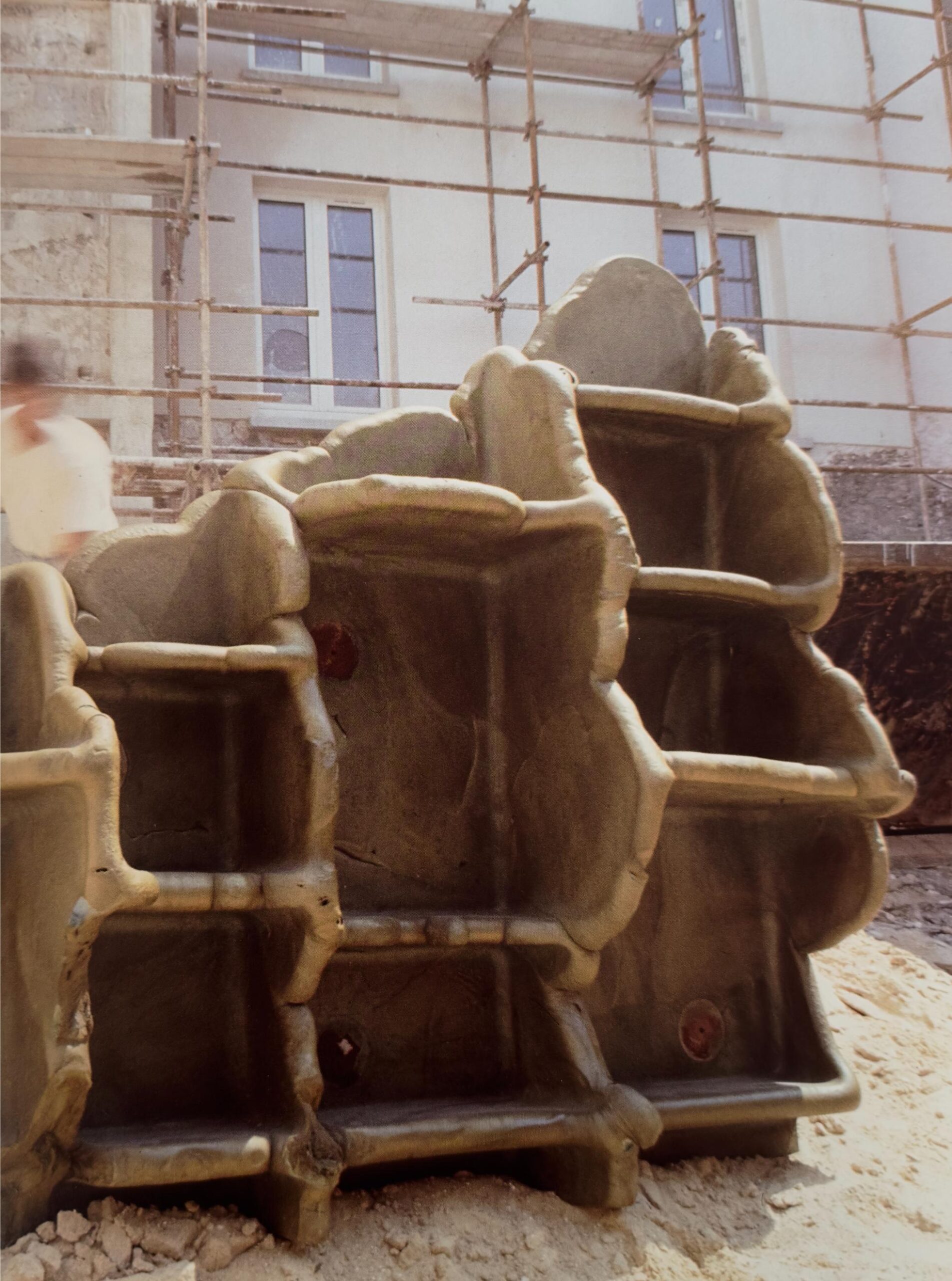
At first glance, the Sick Cabinet appears as a majestic sand-colored column. It exudes an indescribable attraction. A frenzied desire to understand it arises in the viewer.
Gaetano Pesce’s furniture always comes with a powerful sensory and olfactory experience. The sense of smell awakens, the eyes question, the touch exults. What is this porous material layered in strata, matte in places, glossy in others emphasizing strange forms? Eyes and a nose begin to emerge. These questions vanish with a touch.
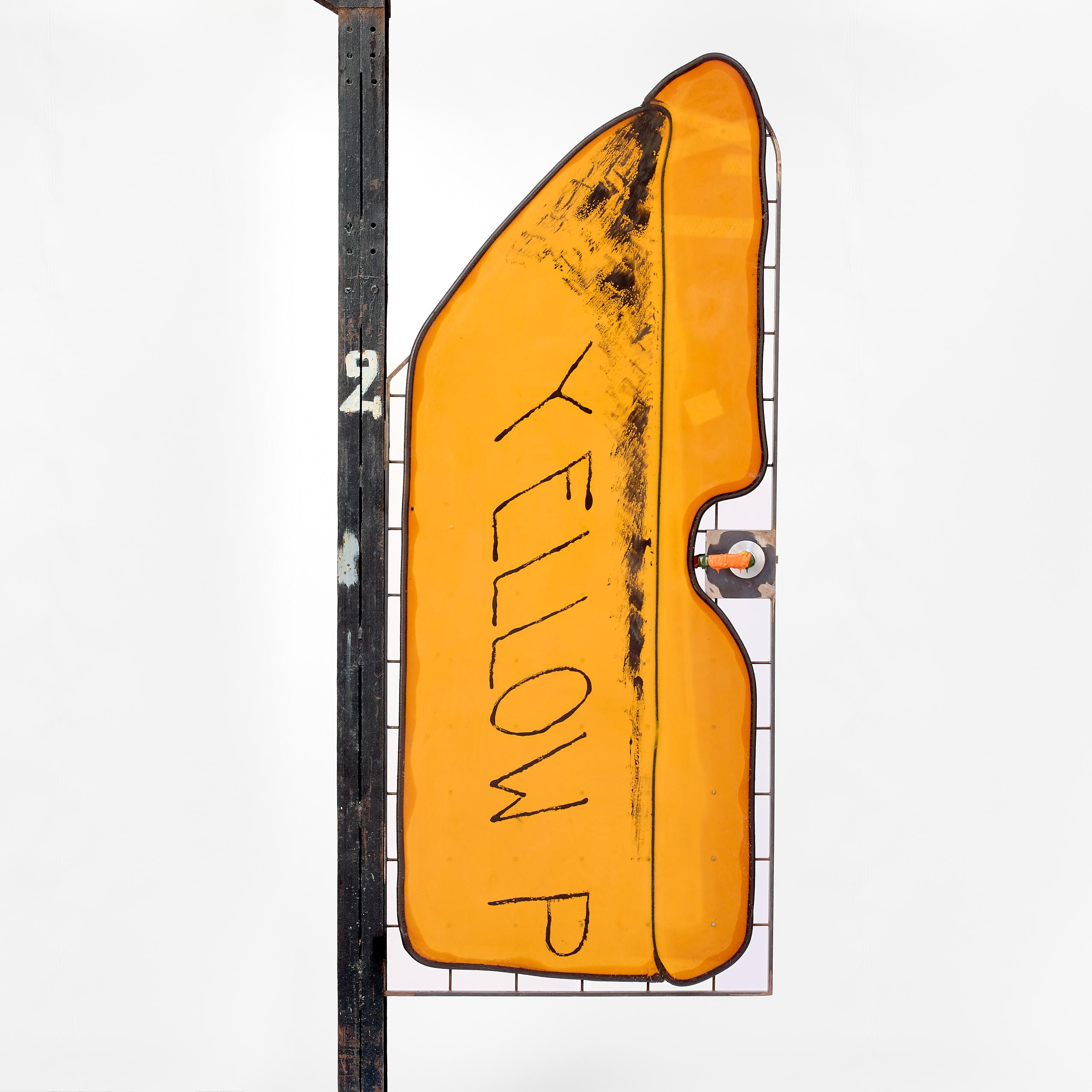
This strange colossus seems mummified, wrapped in resin-soaked gaze strips. Yet no corpse is to be found here. A heavy cast iron mass holds the cabinet shut, almost refusing to let it open. This mummy won’t allow itself to be profaned.
Once opened, polychrome resin panels in shades of plum, red-orange, and yellow appear. A pious core sits at face height – the last remaining organ. The mummy has kept its entrails. You may store your treasures within; they will be guarded by a force greater than your own.
The Pompidou Cabinets
On the occasion of the retrospective organized by the Centre Pompidou in 1996, Gaetano Pesce personally created five monumental cabinets in his Soho studio. Produced between 1991 and 1995, these cabinets are unique pieces in Gaetano Pesce’s career, which the Pompidou Museum would go on to describe as “one of a kind.”
The Anne Frank Cabinet, for example, entombs children’s toys, trinkets, beaded necklaces, dentures, and Stars of David. This cabinet is in fact a tribute to the victims of the Second World War.
The Mona Lisa Cabinet echoes the masters of the Renaissance. Pesce gave it colossal dimensions: two meters seventy-two in height, one meter eighty-three in width, and one meter forty-eight in depth. It opens via four freely positioned doors. Hollowed-out niches symbolize the face and hands of Da Vinci’s muse.
Do You Still Love Me? tells the story of a couple after a quarrel. Two figures are positioned back-to-back, their faces turned in opposite directions. But when the cabinet is opened, the two faces are side by side again. In a new kiss, one asks the other: “Do you still love me?”
Sick or Sikh?:
The Sick or Sikh cabinet is a large and unique storage piece, created by Gaetano Pesce in 1995.
While “Sick” refers to illness, “Sikh” refers to Sikhism, the world’s fifth-largest religion, whose followers notably wear a turban called a dastar. The confusion between “Sick” and “Sikh” comes from the homophone [siːk]. A pun, a tangle, or indecision? No one really knows. What’s certain is that confusion reigns, both in various publications about the cabinet and in Pesce’s New York studio: “No one at the studio ever knew how to spell the name of [that] tall cabinet.”
The cabinet’s appearance, evoking bandages to heal wounds or a turbaned face, sheds no light on the mystery of its name Sick/Sikh. But after all, isn’t the aesthetic ambiguity of this piece just as delightful as the enigma of its title?
An Ode to Sensory Awakening:
At first glance, the Sick Cabinet appears as a majestic sand-colored column. It exudes an indescribable attraction. A frenzied desire to understand it arises in the viewer.
Gaetano Pesce’s furniture always comes with a powerful sensory and olfactory experience. The sense of smell awakens, the eyes question, the touch exults. What is this porous material layered in strata, matte in places, glossy in others emphasizing strange forms? Eyes and a nose begin to emerge. These questions vanish with a touch.
This strange colossus seems mummified, wrapped in resin-soaked gaze strips. Yet no corpse is to be found here. A heavy cast iron mass holds the cabinet shut, almost refusing to let it open. This mummy won’t allow itself to be profaned.
Once opened, polychrome resin panels in shades of plum, red-orange, and yellow appear. A pious core sits at face height – the last remaining organ. The mummy has kept its entrails. You may store your treasures within; they will be guarded by a force greater than your own.