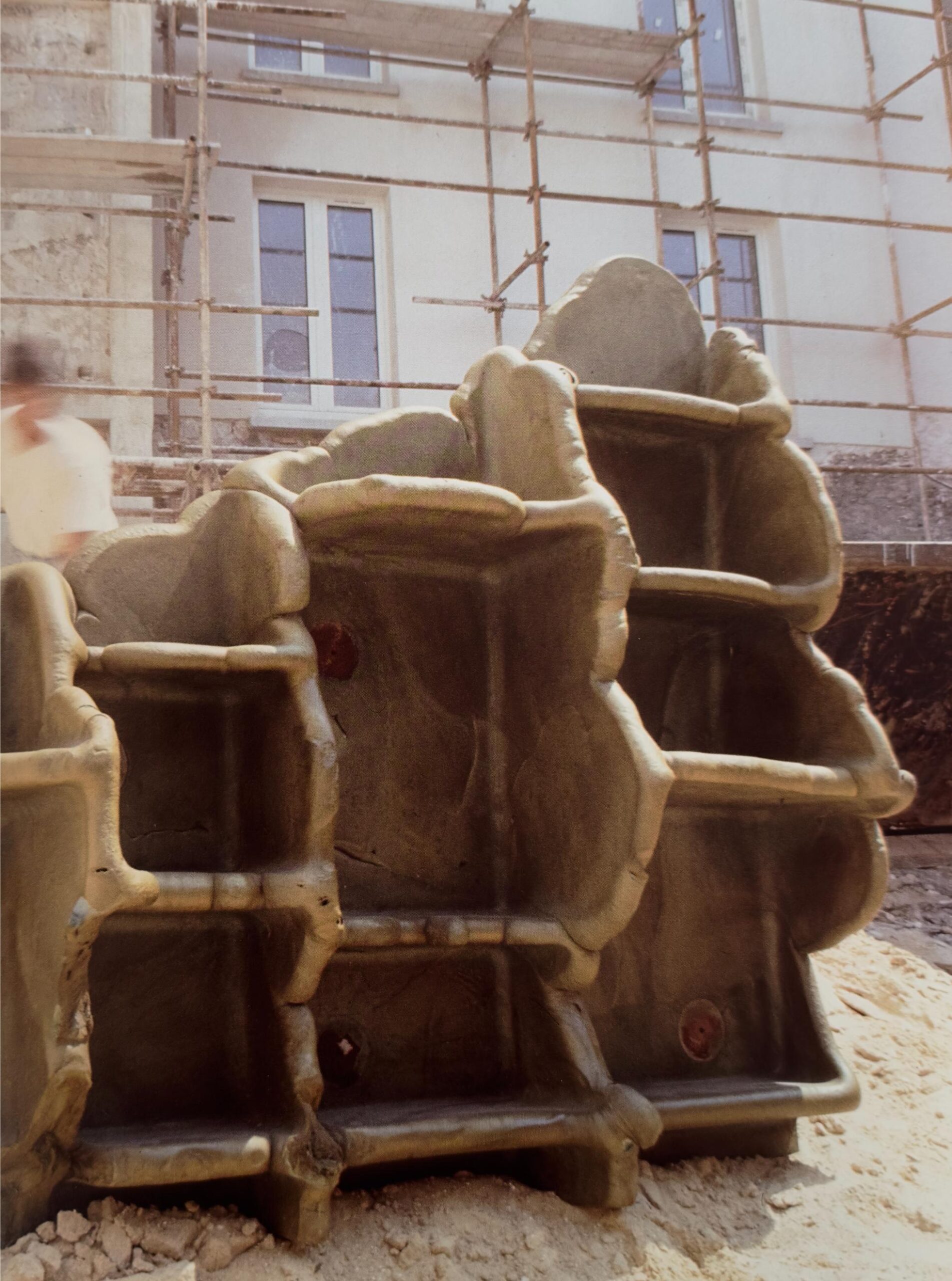
Recognition came in 1990, when the city of Osaka gained a unique building. Made of countless red panels housing lush plant niches, it evokes the principles of Japanese gardens. Through an autonomous irrigation and drainage system 80 plant species grow freely along the vertical garden of the Organic Building. The building’s interior is typical of Gaetano Pesce’s design sensibility: colored resin, organic forms, and one-of-a-kind furniture.
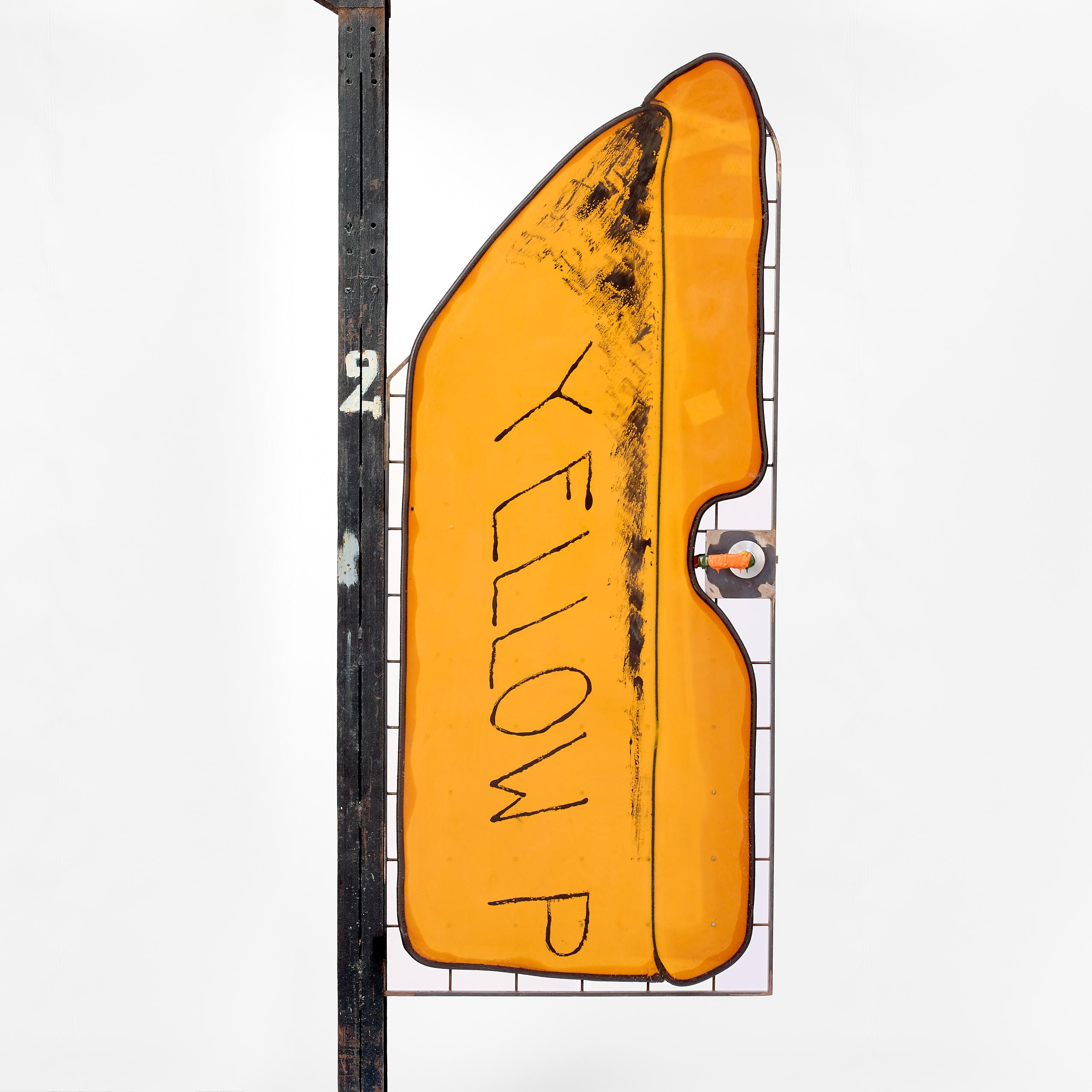
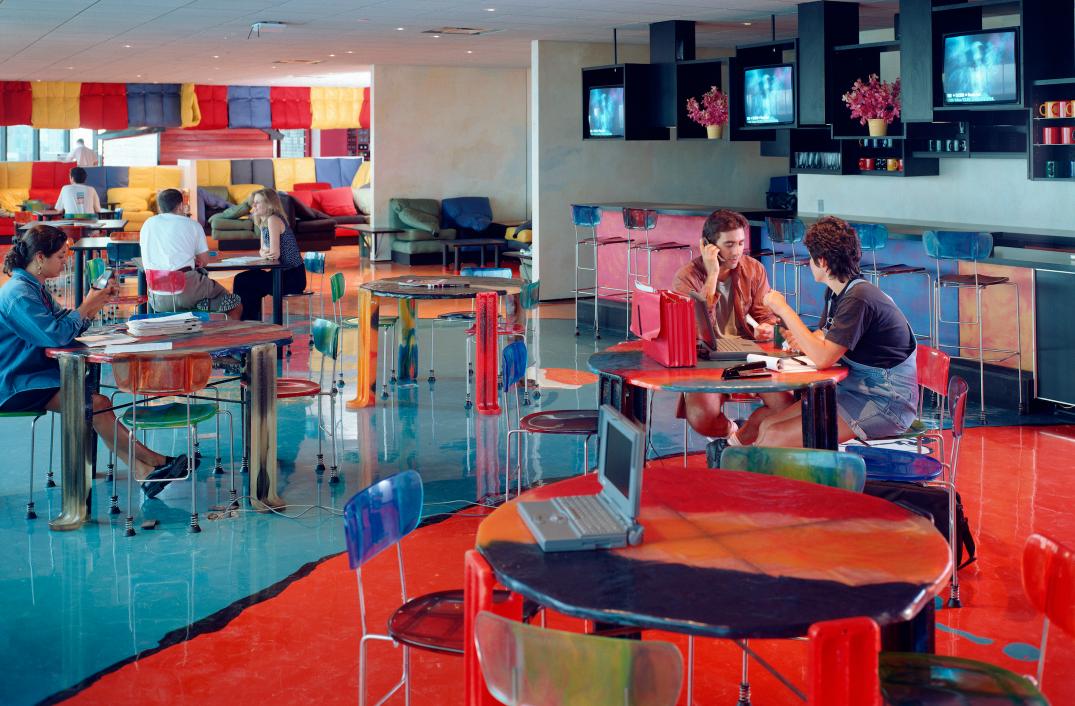
However, it was in New York, in 1994, that Gaetano Pesce completed one of his most ambitious projects: the headquarters of the advertising agency Chiat\Day, commissioned by the visionary Jay Chiat. In this space, Gaetano Pesce unleashed his full architectural vocabulary: polymorphic doors, translucent walls, and modular workstations. The project is now regarded as one of the first true “flex offices” in history, abolishing the traditional spatial hierarchies of the corporate world. Here, architecture becomes a political manifesto for the future of work where creativity takes precedence over conformity.
Far from being mere decorative gestures, Gaetano Pesce’s architectural works are bold statements. For the artist, form is ideology. Whether working on a skyscraper or a coffee table, his goal remains the same: to make individuality visible, reject standardization, and celebrate difference.
Often considered too disruptive, many of his architectural projects remained unbuilt, like the Pont de l’Europe envisioned for the city of Strasbourg.
One thing is certain: it is time to rediscover the work of Gaetano Pesce not as that of a designer or an architect, but as that of a total artist, who skillfully drew upon the codes of architecture to better shape the objects that inhabit our interiors.
Pesce’s works are merely fragments of a larger artistic vision: radical, deeply human, and powerfully unified.
Pesce, Architect Before Designer
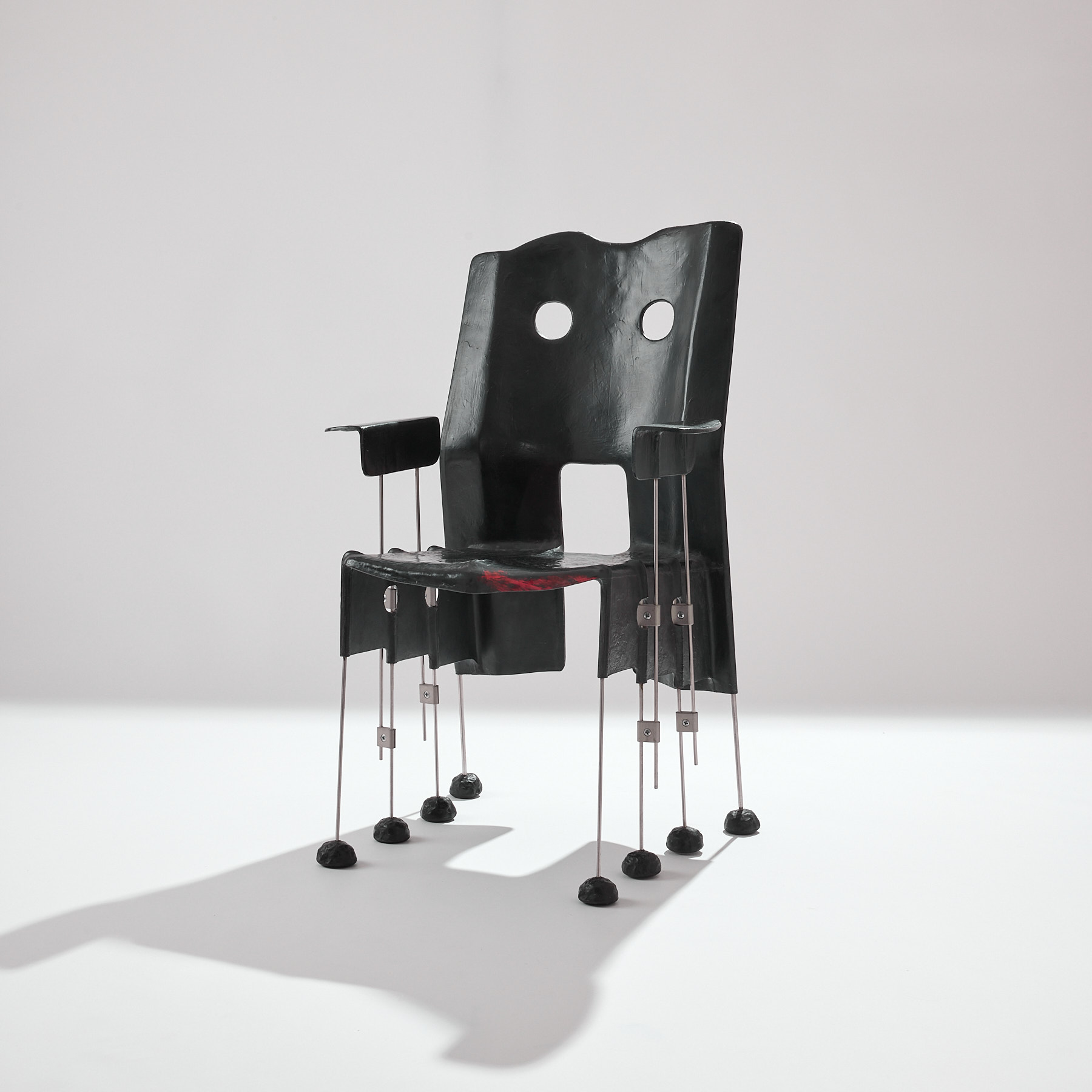
If the name Gaetano Pesce immediately evokes multicolored resin armchairs and objects with irregular plastic charm, it would be reductive to confine him to these creations only. For before becoming an acclaimed designer, Pesce was an architect, a true one in the fullest sense of the word, a creator of spaces, visions, and immersive experiences.
Born in La Spezia in 1939, Gaetano Pesce was trained at the University of Venice. He began his career in the 1960s as part of the radical Gruppo N. From the outset, he asserted a fierce desire to break away from the codes of functionalist architecture. His mission was to humanize space, inject emotion into concrete, and subvert the rigid rules of modern “good taste.” For Gaetano Pesce, architecture was not a fixed art, but a living organism, mirroring the human being it is meant to shelter.
His architectural manifesto found its first expression in landmark projects such as his 1971 housing concept, envisioned as an underground bunker in response to Cold War anxieties.
Recognition came in 1990, when the city of Osaka gained a unique building. Made of countless red panels housing lush plant niches, it evokes the principles of Japanese gardens. Through an autonomous irrigation and drainage system 80 plant species grow freely along the vertical garden of the Organic Building. The building’s interior is typical of Gaetano Pesce’s design sensibility: colored resin, organic forms, and one-of-a-kind furniture.
However, it was in New York, in 1994, that Gaetano Pesce completed one of his most ambitious projects: the headquarters of the advertising agency Chiat\Day, commissioned by the visionary Jay Chiat. In this space, Gaetano Pesce unleashed his full architectural vocabulary: polymorphic doors, translucent walls, and modular workstations. The project is now regarded as one of the first true “flex offices” in history, abolishing the traditional spatial hierarchies of the corporate world. Here, architecture becomes a political manifesto for the future of work where creativity takes precedence over conformity.
Far from being mere decorative gestures, Gaetano Pesce’s architectural works are bold statements. For the artist, form is ideology. Whether working on a skyscraper or a coffee table, his goal remains the same: to make individuality visible, reject standardization, and celebrate difference.
Often considered too disruptive, many of his architectural projects remained unbuilt, like the Pont de l’Europe envisioned for the city of Strasbourg.
One thing is certain: it is time to rediscover the work of Gaetano Pesce not as that of a designer or an architect, but as that of a total artist, who skillfully drew upon the codes of architecture to better shape the objects that inhabit our interiors.
Pesce’s works are merely fragments of a larger artistic vision: radical, deeply human, and powerfully unified.