An Iconographic Reliquary

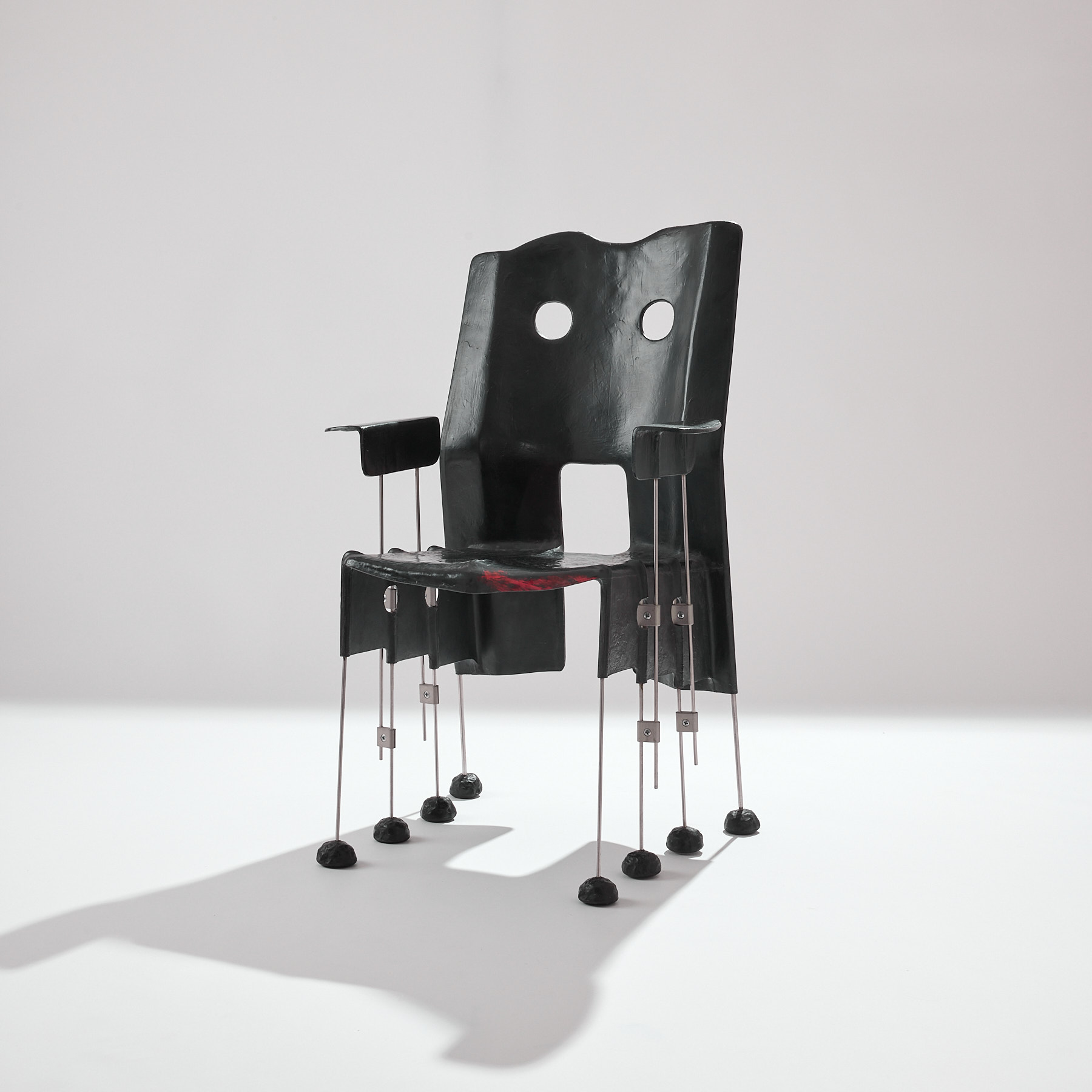
All Pratt Chairs were cast from the same mold. Theoretically identical in shape, each chair becomes visually unique thanks to the materiality of the resin, which produced singular contrapposto-like stances.
Contrapposto for a chair? A pose usually reserved for Greek statuary, here became an intentional anthropomorphism. For Gaetano Pesce, the Pratt Chair exists somewhere between human, animal, and insect.

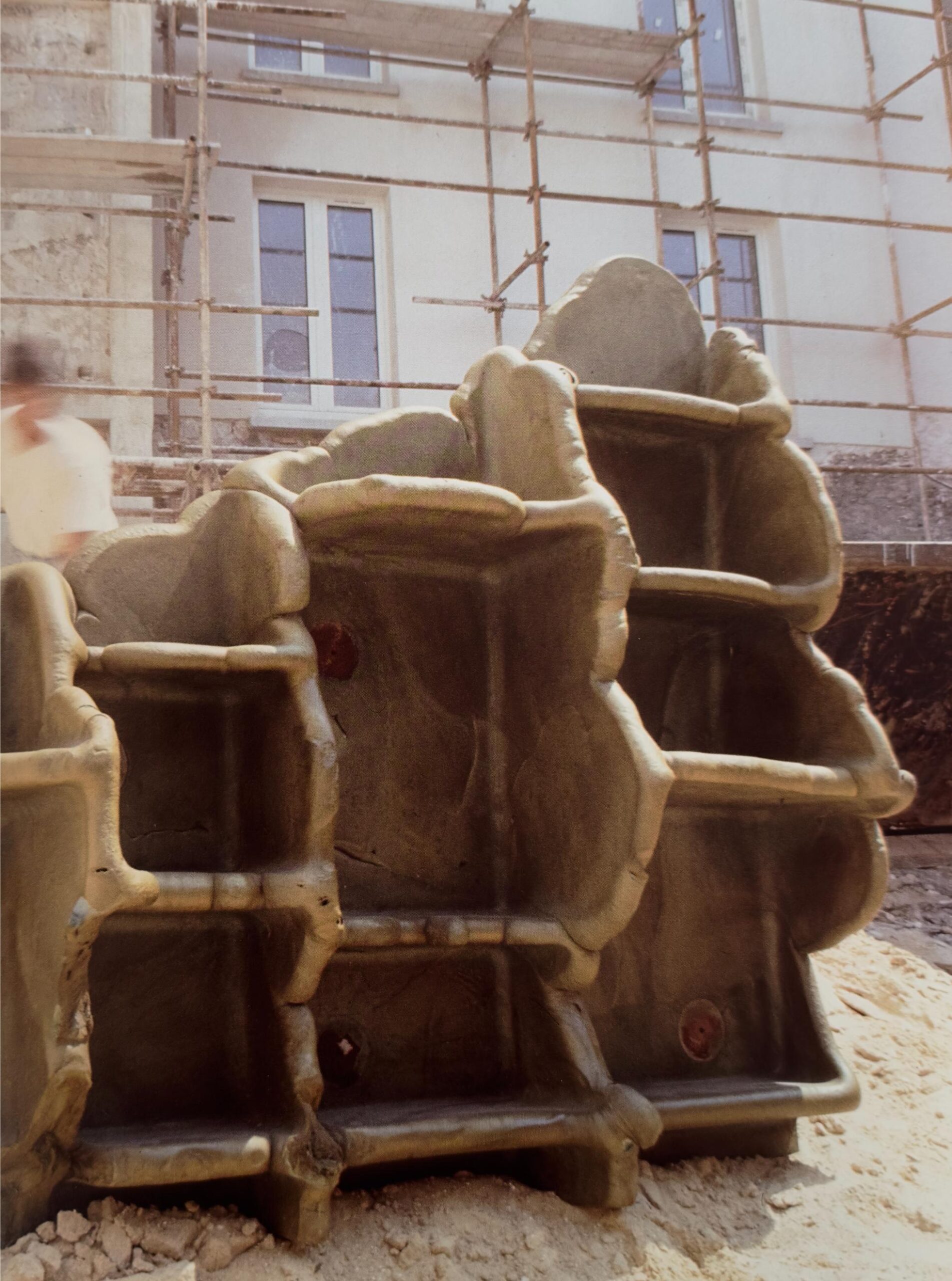
The mold itself is rich with intricate, almost bas-relief-like details: faces, a crucifix, mountains, playing cards, an erotic scene and even an imprint of Pesce’s own hand.
The Pratt Chair is so a reliquary of the artist’s passions.
These symbolic elements represent what Pesce sees as essential to an artist’s creativity:
— the crucifix for faith in one’s work
— the labyrinth for the process of searching
— sex for pleasure
— bread as a symbol of success that nourishes its creator
— and the hand, crucial to the very act of making.

In a mechanized, automated world like the 20th century, the hand re-centers the imperfect production of human being at the heart of creation.
Placed above what resembles a face, the hand is the invisible force, which is shaping, lifting, placing, and ultimately, toppling the chair.
Ultimately it brings motion to the static.

The Pratt chair

The Pratt Chair series was created in 1984 by Gaetano Pesce. This set of nine chairs explores the concept of structural solidity in furniture. Each chair features a different resin composition, with varying amounts of hardener, resulting in degrees of firmness.

The original idea behind the Pratt Chair plays with the boundary between sculpture and functional object.
From a heap of colored resin to a usable seat, the only difference lies in the recipe.
Pesce initially envisioned producing nine pieces coming from nine different resin compositions, resulting in a serie of 81 unique chairs. However, in an interview with Glenn Adamson, he confessed that only 34 were ever made, each distinguished by its color.

Although it’s often said that the Pratt Chair was commissioned by the Pratt Institute in New York, the artist himself denied this. Pesce collaborated with students at the Institute, making use of their studios and equipment at a time when his own New York workspace was too limited to handle such a complex project.
The original prototype was sculpted in wax in the Pratt Institute’s workshops using the tools available there but the wax model was sadly destroyed shortly after its creation.

An Iconographic Reliquary

All Pratt Chairs were cast from the same mold. Theoretically identical in shape, each chair becomes visually unique thanks to the materiality of the resin, which produced singular contrapposto-like stances.
Contrapposto for a chair? A pose usually reserved for Greek statuary, here became an intentional anthropomorphism. For Gaetano Pesce, the Pratt Chair exists somewhere between human, animal, and insect.

The mold itself is rich with intricate, almost bas-relief-like details: faces, a crucifix, mountains, playing cards, an erotic scene and even an imprint of Pesce’s own hand.
The Pratt Chair is so a reliquary of the artist’s passions.
These symbolic elements represent what Pesce sees as essential to an artist’s creativity:
— the crucifix for faith in one’s work
— the labyrinth for the process of searching
— sex for pleasure
— bread as a symbol of success that nourishes its creator
— and the hand, crucial to the very act of making.

In a mechanized, automated world like the 20th century, the hand re-centers the imperfect production of human being at the heart of creation.
Placed above what resembles a face, the hand is the invisible force, which is shaping, lifting, placing, and ultimately, toppling the chair.
Ultimately it brings motion to the static.

Read the other focus

El
Liston,
Square lamp

The
Broadway
series

Nobody’s
Perfect
series

The
Pompidou
Cabinets

Pesce’s
Tables

Pesce
at the
C.I.R.V.A

Architect
Before
Designer