This project emerged from the meeting of two singular visions: that of Jay Chiat, a major figure in the American advertising world, and that of Gaetano Pesce, deeply committed to the uniqueness of forms and individuals. The former sought to invent a new way of working based on mobility, dematerialization, and autonomy; the latter gave this ambition a radical spatial translation. Jay Chiat envisioned a “paperless office,” adapted to the technological shifts of the time, in which the fixed workstation would lose its central role in favor of a more flexible and mobile use of space. In this sense, the Chiat\Day project can be seen as an early experiment in what would later be called the flex office or hot desking.
For Gaetano Pesce, the goal was not simply to reorganize functions, but to redefine the very way people inhabit the workplace. He imagined the Chiat\Day agency as a kind of interior micro-city, composed of open and mobile zones, without rigid organization or strongly marked hierarchy. No one owns a fixed place: people move through the space, settle where they wish, and shape their own relationship to work.
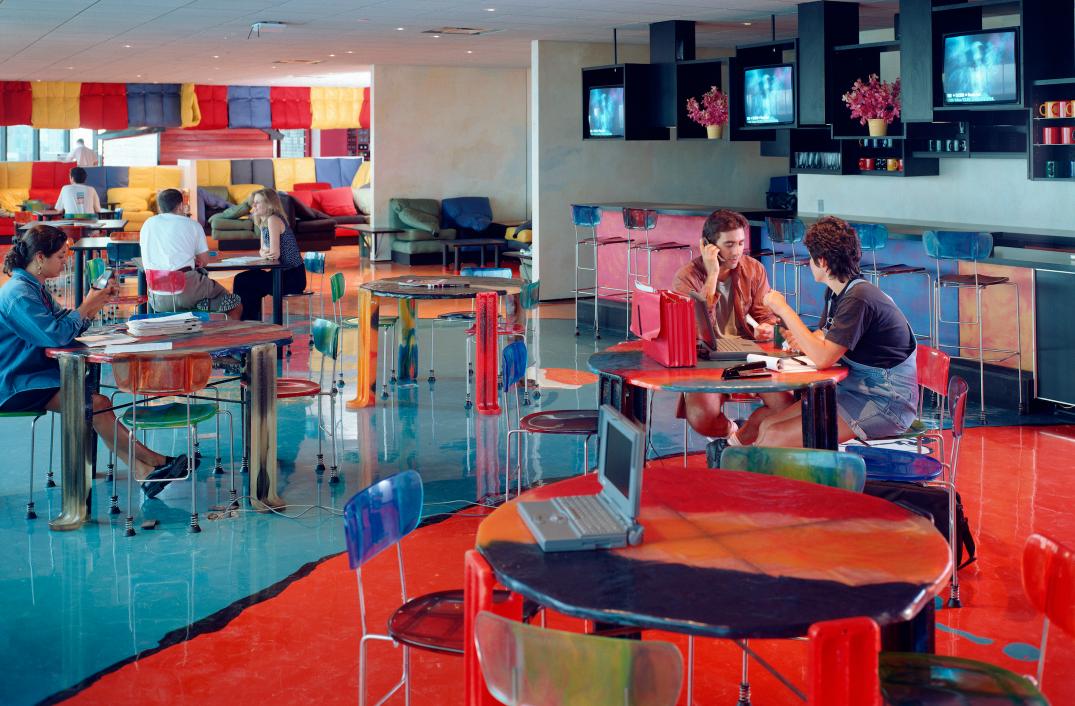
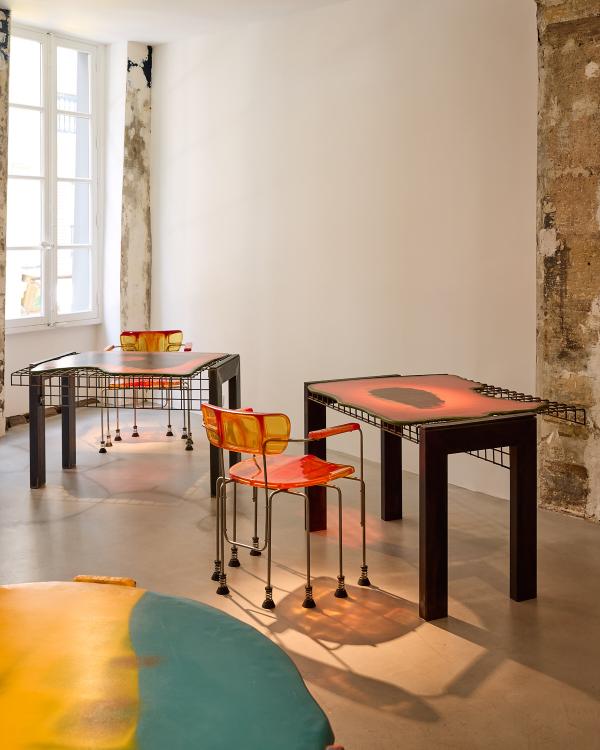
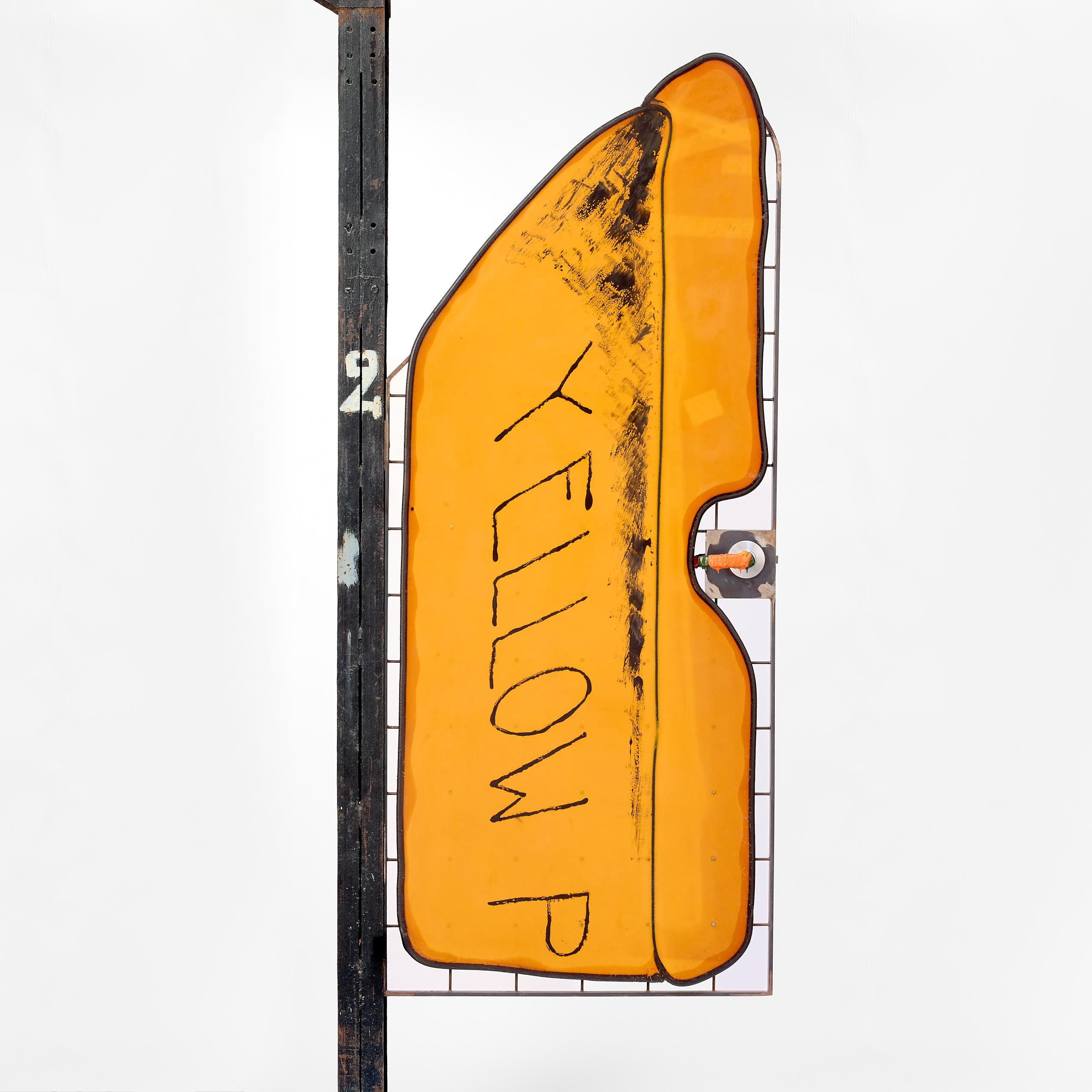
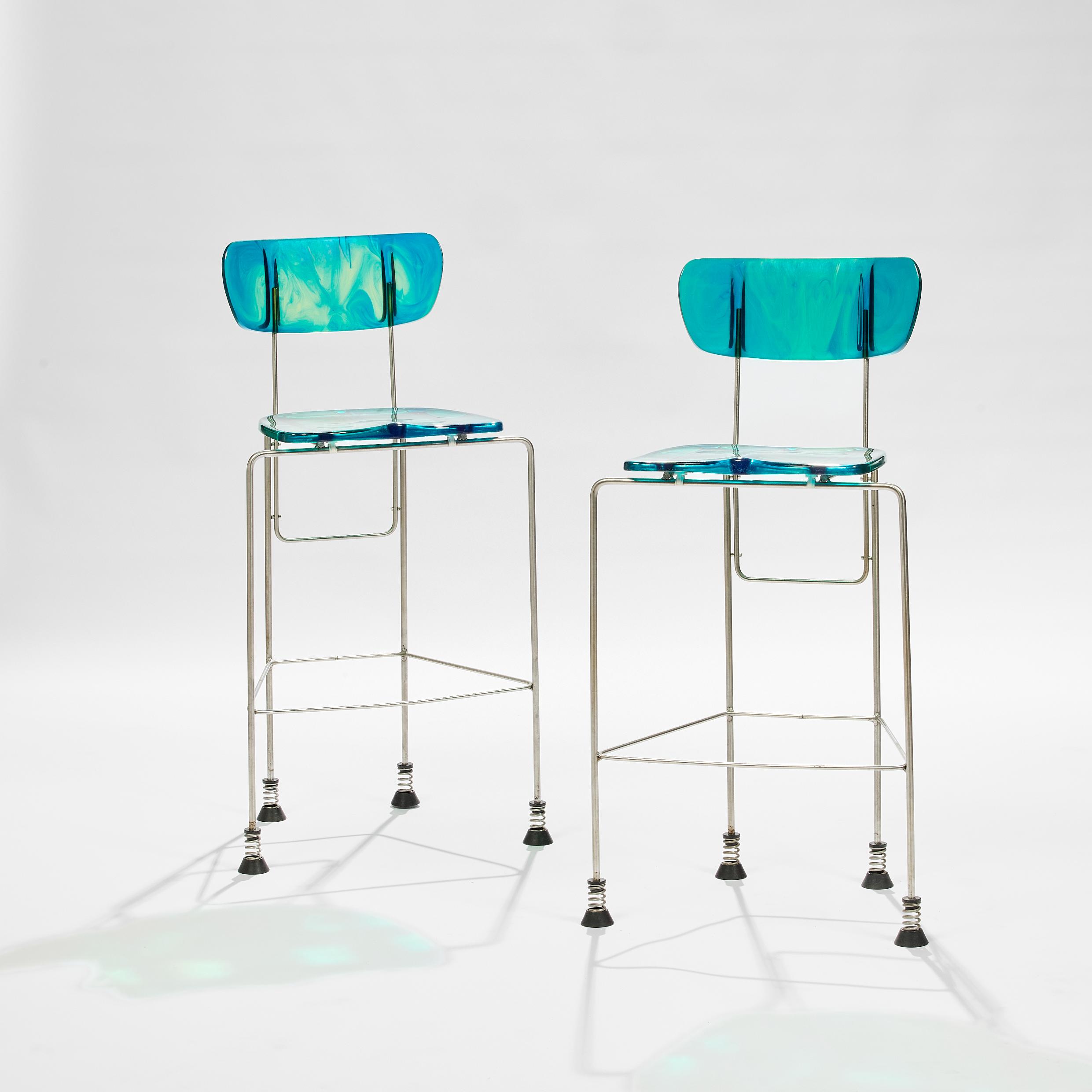
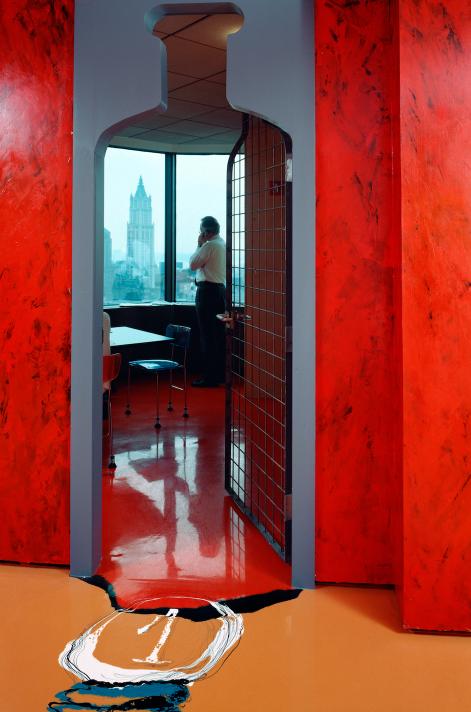
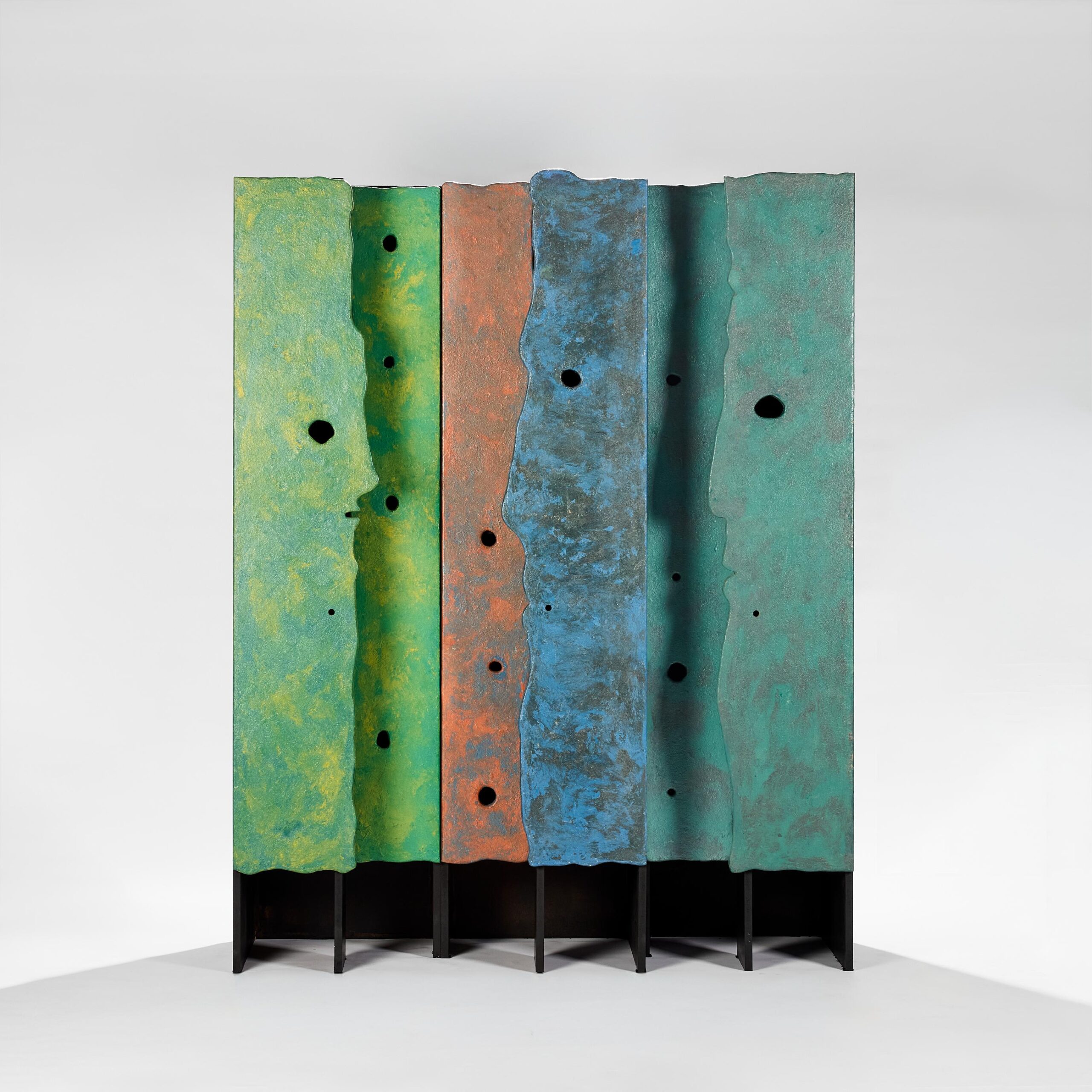
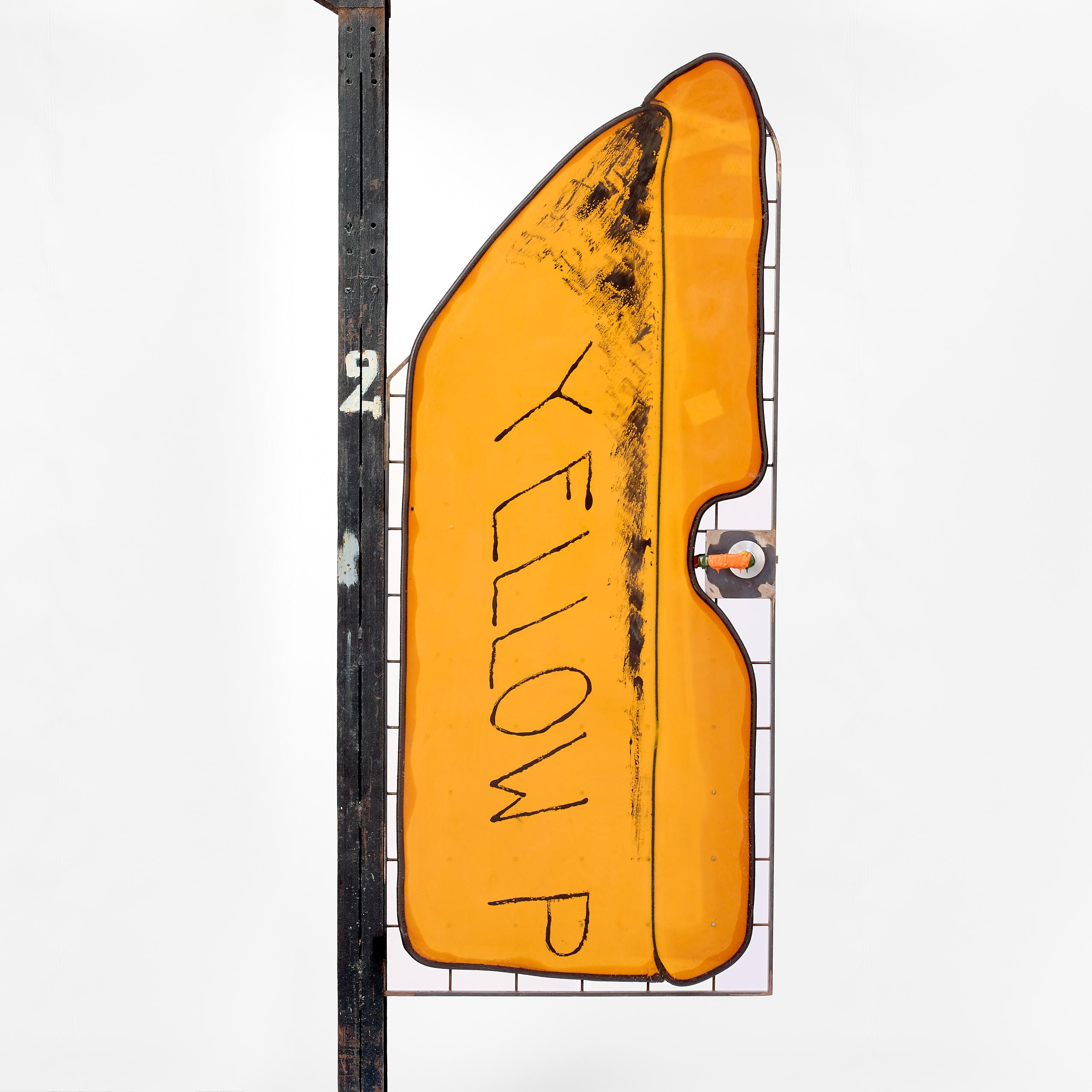
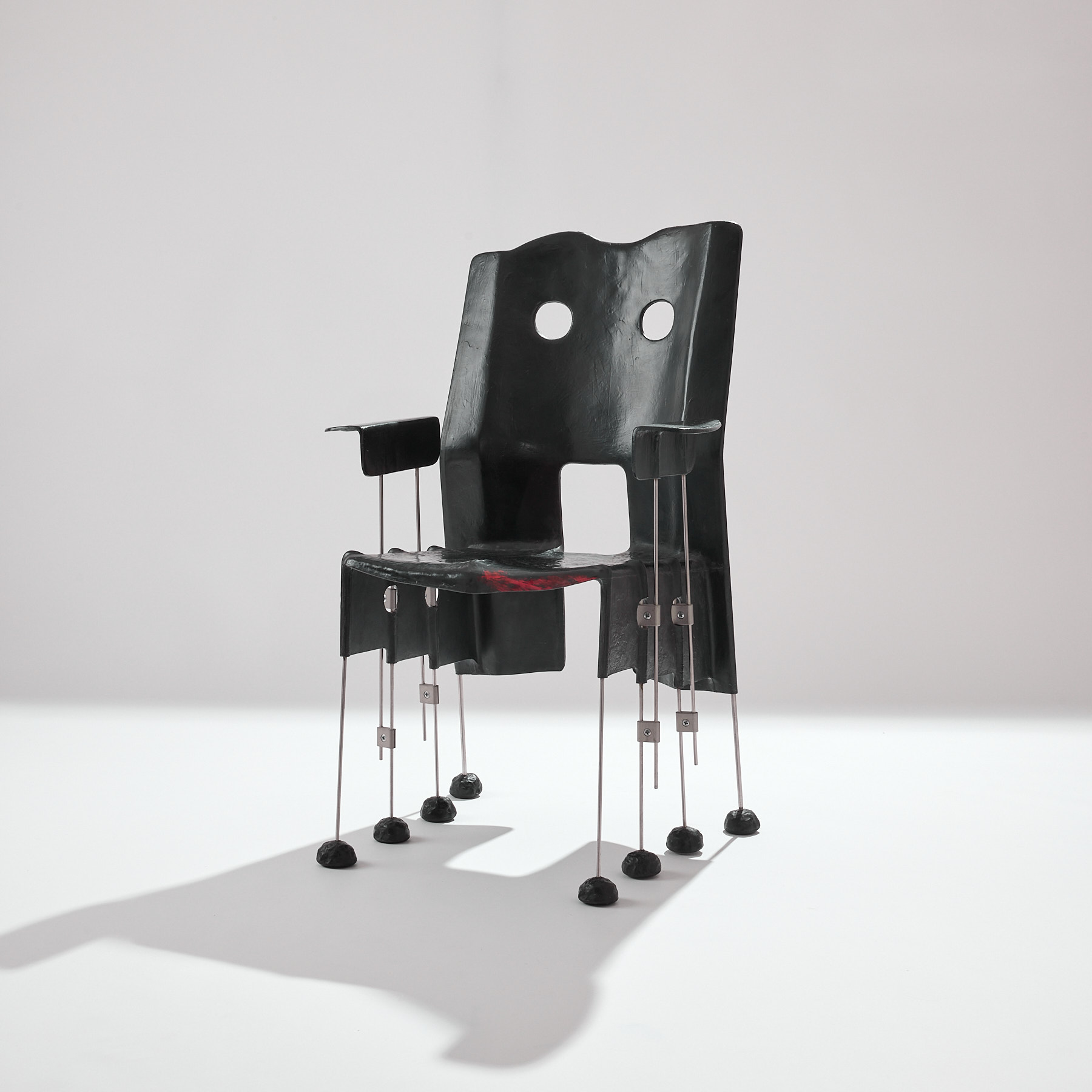
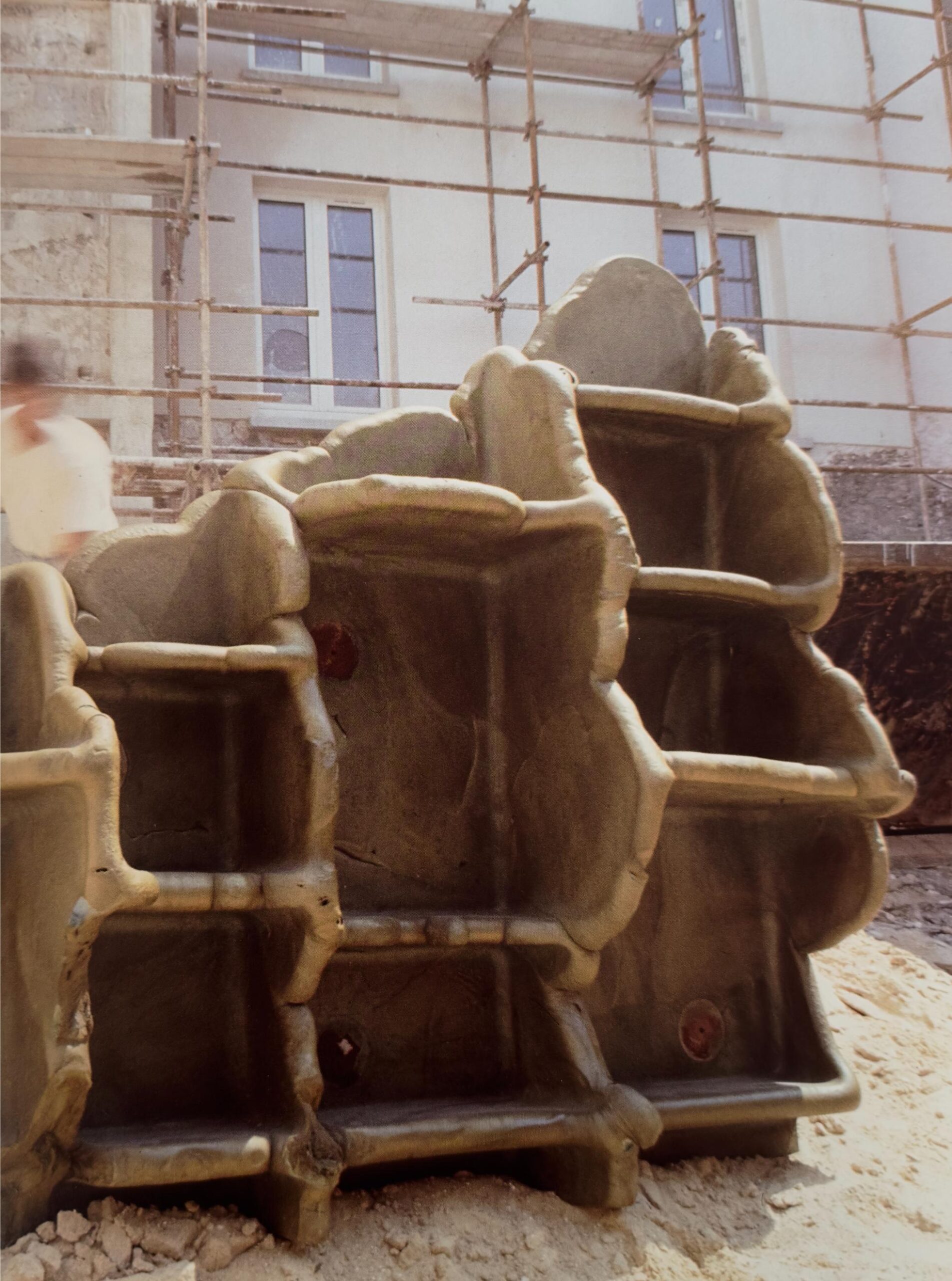
The Chiat\Day offices unfold as a polychrome, expressive, and narrative universe, where floors, furniture, and doors all participate in the same visual language. Colored resin, irregular forms, exposed metal structures, and custom-designed elements give the whole a distinctive identity. Here, space does not merely fulfill a function, it actively shapes the ways people work, interact, and inhabit the environment. This approach fully aligns with Gaetano Pesce’s philosophy, for whom design and architecture should reflect human diversity rather than erase it.
One of the most striking aspects of the project is its closeness to the domestic realm. Gaetano Pesce does not conceive the office as a cold or strictly administrative space, but as a more livable and familiar environment designed to meet everyday needs. On the 38th floor, The Store, or Main Company Store, where employees come each morning to drop off personal belongings and pick up their work materials, takes the form of a large, fleshy red resin mouth. Through this gesture, Pesce transforms an ordinary transitional point into an almost anthropomorphic object, playful, sculptural, and instantly memorable.
Other spaces extend this logic. The Clubhouse, designed as an open and welcoming cafeteria, gives the office a more collective and informal dimension. It is no longer simply a place for a break, but an environment intended to encourage interaction, relaxation, and a shared everyday experience. Similarly, the Doghouse, conceived as a screening room, asserts its own strong identity. With the silhouette of a dog drawn into the resin floor, Pesce introduces an image that is simple, playful, and immediately recognizable, giving the room a strong visual presence. Each space thus appears as a unique place, endowed with its own imaginative world.
Work is no longer confined within an abstract framework; it takes place in a freer, more vibrant, and more human environment, where spaces carry names, images, and strong forms. This symbolic dimension is essential in Gaetano Pesce’s thinking. For him, architecture is not limited to organizing functions, it also gives identity to places. The Chiat\Day offices therefore resemble less a rational organization than a lived-in environment, closer to a living space than to a traditional office.
Yet this radical approach is not without ambiguity. While some employees saw it as a source of stimulation and freedom, others were unsettled by the lack of fixed reference points and by the visual intensity of the space. This mixed reception is fully part of the project. It shows that, for Gaetano Pesce, architecture is not meant to be neutral, it can also challenge habits and question the conventions of the traditional office.
Through the Chiat\Day offices, Gaetano Pesce thus affirms a singular and experimental conception of the workplace. He advocates for a mobile, colorful, expressive, and non-standardized environment, in which architecture fully participates in a different way of living and thinking about work. More than just an office design, the project ultimately appears as a way of rethinking, through forms, objects, and uses, everyday life within the company.
Chiat\Day: the rise of the flex office
With the design of the Chiat\Day offices in New York in the mid-1990s, Gaetano Pesce put forward a profoundly distinctive vision of the workplace. At a time when offices were still largely conceived as rational spaces, organized around repetitive fixed workstations, spatial hierarchy, and a certain functional neutrality, the Italian designer instead imagined a free, colorful, and fluid environment. At Chiat\Day, space is no longer seen as a mere infrastructure for production, but as a daily experience capable of transforming uses, behaviors, and even the very perception of work.
The Chiat\Day offices unfold as a polychrome, expressive, and narrative universe, where floors, furniture, and doors all participate in the same visual language. Colored resin, irregular forms, exposed metal structures, and custom-designed elements give the whole a distinctive identity. Here, space does not merely fulfill a function, it actively shapes the ways people work, interact, and inhabit the environment. This approach fully aligns with Gaetano Pesce’s philosophy, for whom design and architecture should reflect human diversity rather than erase it.
One of the most striking aspects of the project is its closeness to the domestic realm. Gaetano Pesce does not conceive the office as a cold or strictly administrative space, but as a more livable and familiar environment designed to meet everyday needs. On the 38th floor, The Store, or Main Company Store, where employees come each morning to drop off personal belongings and pick up their work materials, takes the form of a large, fleshy red resin mouth. Through this gesture, Pesce transforms an ordinary transitional point into an almost anthropomorphic object, playful, sculptural, and instantly memorable.
Yet this radical approach is not without ambiguity. While some employees saw it as a source of stimulation and freedom, others were unsettled by the lack of fixed reference points and by the visual intensity of the space. This mixed reception is fully part of the project. It shows that, for Gaetano Pesce, architecture is not meant to be neutral, it can also challenge habits and question the conventions of the traditional office.
Through the Chiat\Day offices, Gaetano Pesce thus affirms a singular and experimental conception of the workplace. He advocates for a mobile, colorful, expressive, and non-standardized environment, in which architecture fully participates in a different way of living and thinking about work. More than just an office design, the project ultimately appears as a way of rethinking, through forms, objects, and uses, everyday life within the company.