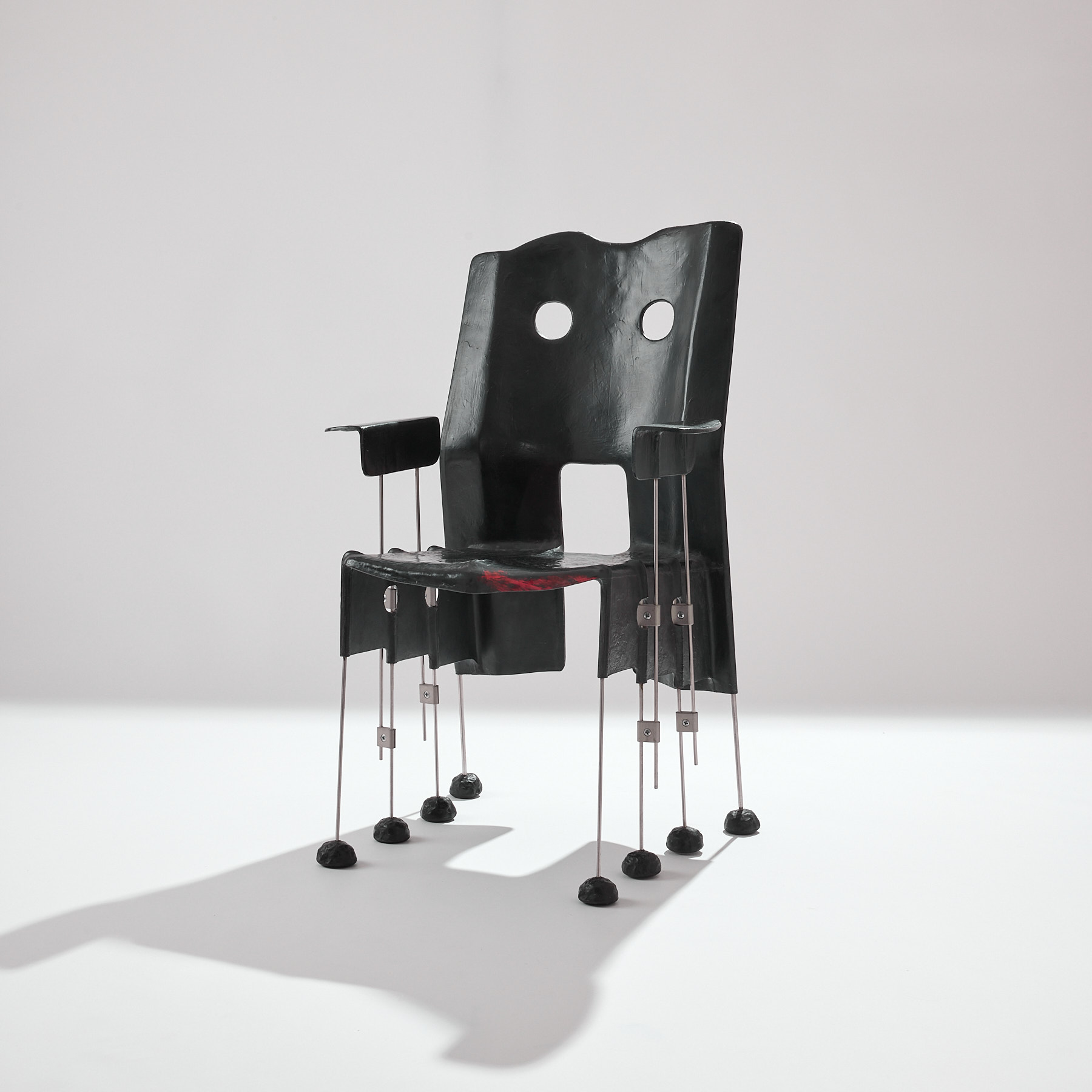
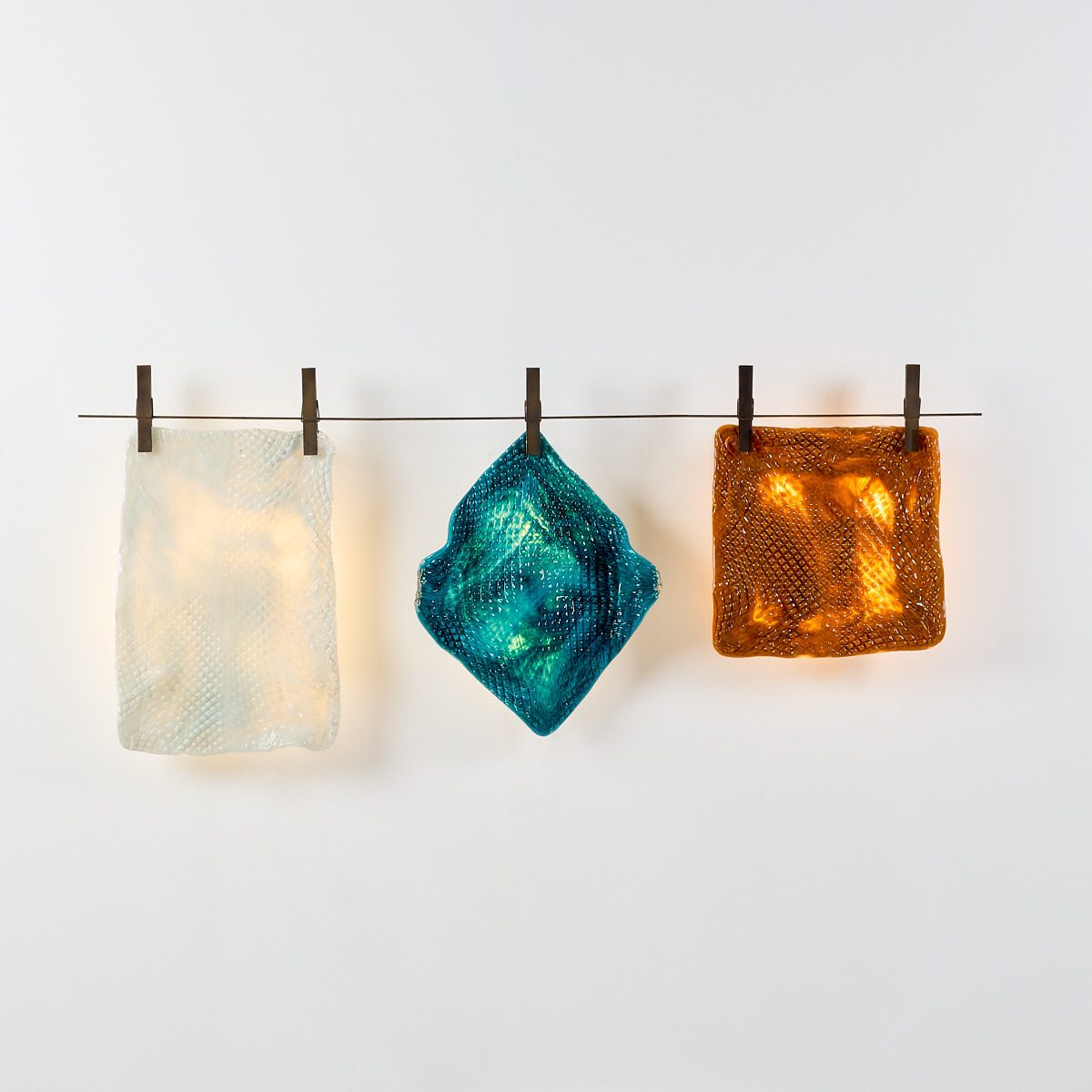
Gaetano Pesce & VIA

Created in 1979 at the initiative of the French Minister of Industry, André Giraud, VIA (Valorisation de l’Innovation dans l’Ameublement, Promotion of Innovation in Furniture Design) occupies an important place in the history of contemporary design. From its inception, VIA emphasized individual creativity and encouraged more experimental approaches to design, contributing to the emergence of the figure of the “designer-artist.” Its activities were structured around several key objectives: supporting young talent, fostering innovation, improving the quality of prototypes, and developing research into materials and manufacturing processes.

Among its most significant initiatives were the Cartes blanches (“free commissions”), entrusted to invited designers who were given complete freedom to develop experimental projects. These investigations did not focus solely on the form of objects, but also on their modes of production, the techniques employed, and the possibility of rethinking industrial manufacturing itself.

Supported by French cultural policies in the early 1980s, particularly under Jack Lang, VIA also formed part of a broader effort to structure and promote contemporary creation through public funding. Design gained new institutional visibility and gradually became integrated into a state-supported framework dedicated to creativity and innovation. Operating simultaneously as a research center, an incubator for young designers, and a dissemination platform, VIA helped establish institutional recognition for contemporary design. Several projects supported by VIA later entered public collections, primarily that of the Centre Pompidou, whose major acquisition from VIA dates to 2010. This acquisition enabled the Centre Pompidou to enrich its collections with numerous works following the exhibition VIA Design 3.0.

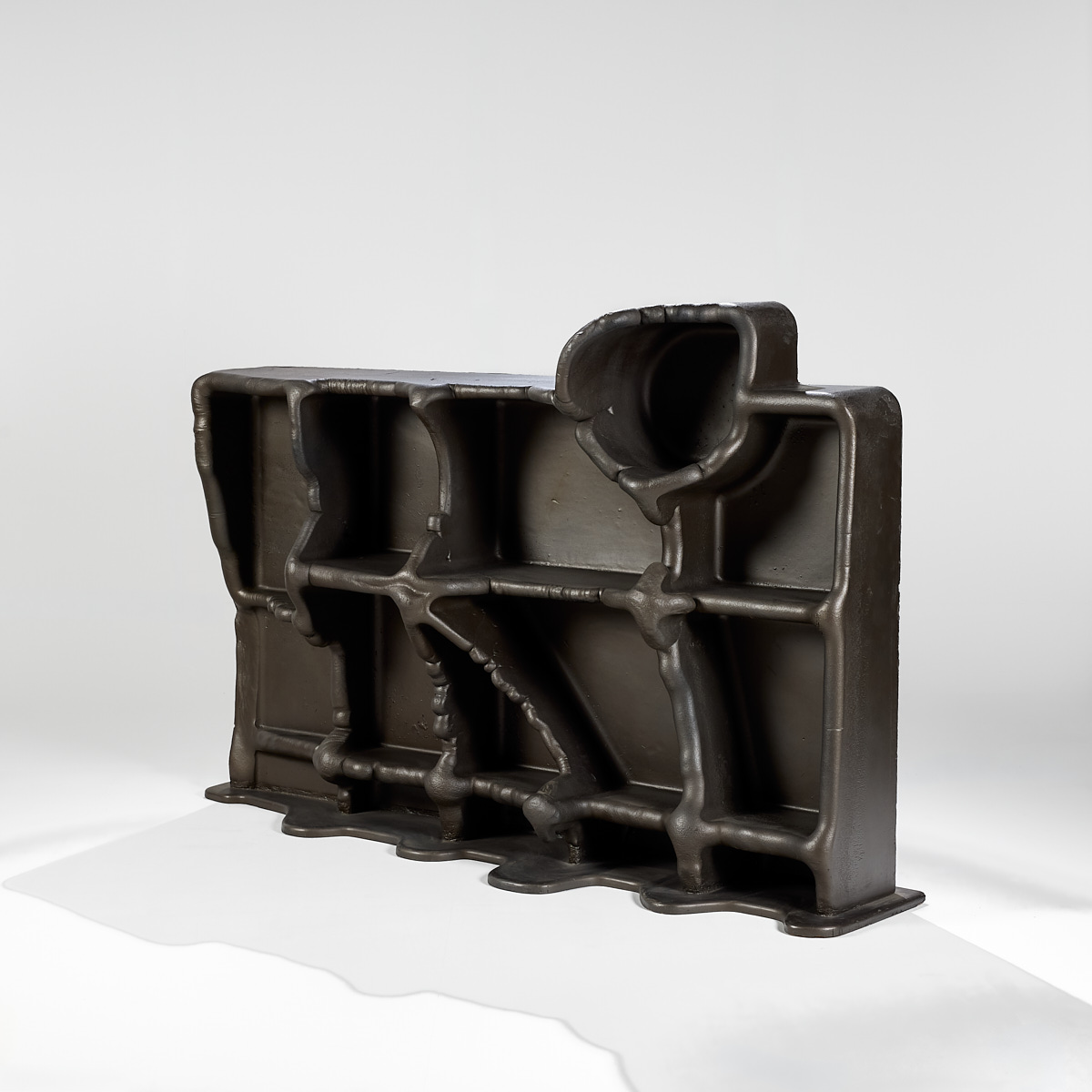
VIA also invited international designers such as Gaetano Pesce. Active between Italy, France, and the United States, Pesce already maintained close ties with the European design scene and had been developing, since the early 1970s, a critical reflection on industrial production and the standardization of objects, but above all on new materials, subjects that closely aligned with the interests of the French institution. In 1981, he created an experimental bookcase for VIA Diffusion that directly extended these investigations through the Carte blanche he was granted.

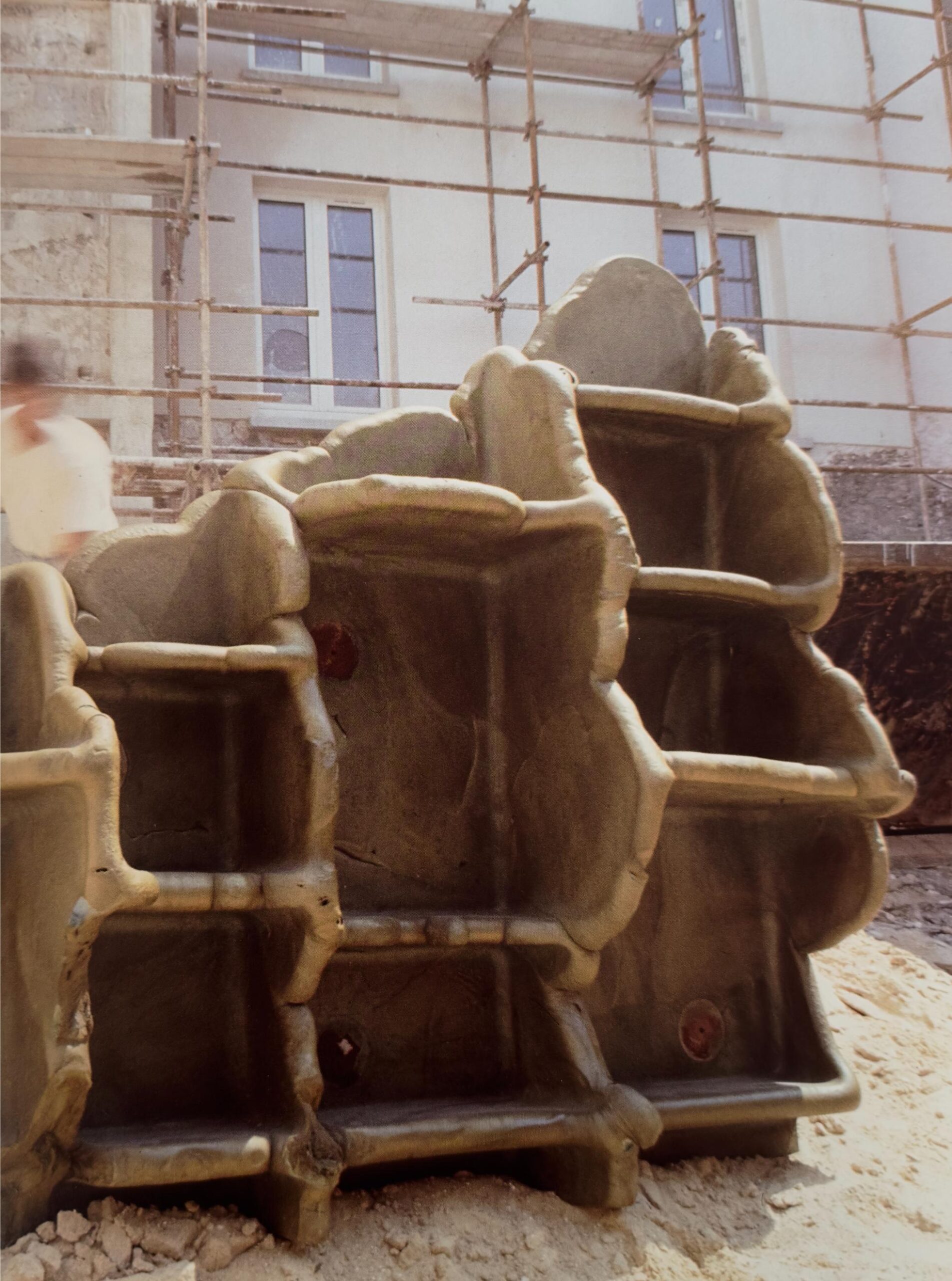
For this bookcase, Gaetano Pesce developed a complex process involving the molding of rigid polyurethane foam. Using a single mold, he sought to produce different pieces by varying certain manufacturing parameters, such as the injection points of the material, the amount of air present in the mold, humidity levels, and temperature. These variations generated distortions and surface irregularities that made each piece unique.

The technical development of the bookcase required several years of research and involved various specialists in plastic materials and molding processes. Depending on the amount of material injected and the resistance of the air within the mold, the bookcase varied in both size and appearance. Some prototypes measured no more than 100 cm in width, while the largest versions reached nearly 300 cm.

The complexity of the project illustrates the importance attached to the prototype within VIA: the goal was no longer simply to produce a functional piece of furniture, but to transform furniture into a genuine conceptual creation.

Unlike many of Gaetano Pesce’s works, which are often colorful and expressive, this bookcase adopts a more restrained aesthetic. This choice can be partly explained by VIA’s institutional context and by a desire to make the experimental project more easily disseminated. Despite this more sober appearance, however, Pesce continued to advocate a vision of design opposed to industrial uniformity, fully consistent with the ideas he would later develop in Le Temps des questions. Thus, as early as 1981, chance and singularity already occupied a central place in his creative practice.

Read the other focus

El
Liston,
Square lamp

The
Pratt
chair

The
Broadway
series

Nobody’s
Perfect
series

The
Pompidou
Cabinets

Pesce’s
Tables

Pesce
at the
C.I.R.V.A

Architect
Before
Designer

The Doors of
Chiat\Day

Chiat\Day:
the rise of
the flex office

Greene
Street chair